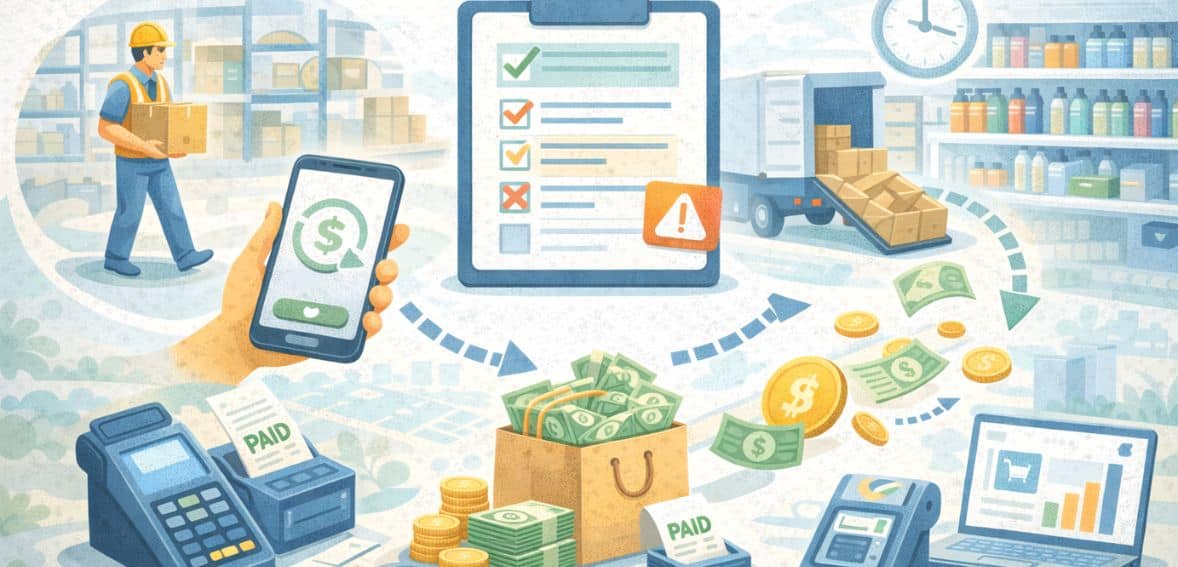
How Real-Time Payments Improve Inventory Replenishment Cycles
Businesses’ operations have always been influenced by inventory replenishment, but these days, survival depends on speed. Suppliers anticipate clarity, customers anticipate availability, and margins provide minimal margin for error. Forecasting is rarely the only cause of replenishment delays.
They are frequently brought on by financial uncertainty, approval friction, and payment settlement delays. Inventory moves slowly when money moves slowly. By coordinating cash flow with operational urgency, real-time payments alter this relationship. Businesses receive immediate confirmation and access rather than having to wait days for funds to clear.
Decisions about inventory can now be implemented right away due to this change. Faster payments enable confident purchasing, cut down on uncertainty, and shorten reorder cycles. Real-time payments are becoming more than just a financial improvement as markets become more erratic and demand becomes less predictable. They are a foundational tool for modern inventory management and competitive responsiveness across industries today.
The Overlooked Role of Payments in Replenishment

Demand signals, supplier capacity, and logistics schedules are frequently the main topics of inventory planning. Although they are regarded as a backend formality, payments subtly regulate speed. Suppliers often wait for payment confirmation or settlement before shipping inventory.
Delays caused by conventional ACH and card systems accumulate throughout the supply chain. Settlement lag makes businesses hesitant, even when they have cash on hand. This bottleneck is eliminated by real-time payments. Instantaneous fund transfers, instantaneous confirmations, and prompt supplier action are all possible.
Waiting times that impede replenishment cycles are eliminated by this alignment. Inventory planning becomes execution-focused rather than precautionary when payments and procurement proceed at the same pace. By responding to actual demand instead of projected buffers, businesses can increase accuracy and cut down on needless stock levels across replenishment workflows.
What Real-Time Payments Actually Change
Faster transactions are not the only benefit of real-time payments. They signify a change in operational certainty. Recipients can access funds instantly after they are cleared and settled in a matter of seconds. Batch windows, deadlines, and pending states do not exist. This immediacy eliminates uncertainty when it comes to inventory replenishment.
Instantaneous funding and confirmation of purchase orders enable suppliers to release goods without delay. Because of this speed, replenishment becomes a responsive process rather than a planned activity. Decisions no longer wait for financial clearance. Instead, cash flow and inventory flow move together. By placing orders closer to actual needs, businesses can lessen their reliance on surplus inventory.
Tighter control and quicker execution across replenishment cycles are made possible by real-time payments, which bring predictability to a system that has historically been rife with delays. This immediacy is driven by real-time payment settlement, which removes batch processing delays and allows funds to clear and become usable within seconds rather than days.
Accelerating Supplier Order Release
Payment certainty frequently determines supplier responsiveness. Suppliers defend themselves by delaying fulfillment or giving other buyers priority when settlement is delayed. This friction is eliminated by real-time payments. Suppliers are reassured that funds are secured by instant confirmation.
Orders are risk-free and can be released right away. This responsiveness increases dependability and reduces lead times. Consistent real-time payments eventually increase supplier trust. Vendors are more inclined to prioritize production or quickly distribute inventory. This benefit increases when demand is high, and availability is determined by speed.
It is not necessary to renegotiate contracts or increase order volume to release orders more quickly. All that’s needed is to eliminate payment uncertainty. Replenishment cycles naturally quicken and become more predictable for both parties when suppliers have faith in the payment process.
Preventing Stockouts Through Payment Speed

Stockouts rarely happen overnight. They result from the gradual accumulation of minor delays. One of the most frequent causes is payment lag. Fast-moving inventory may run out before replacements arrive if reorders are even briefly delayed.
The decision-to-delivery time is shortened by real-time payments. As soon as sales data indicates a need, businesses can place new orders. There is no waiting for approvals or settlement. Inventory can more closely match demand due to this responsiveness.
Businesses rely on speed rather than overstocking to guard against delays. Leaner inventory is made possible by quicker payments without raising risk. Stockouts decrease because replenishment more precisely and reliably keeps up with consumption rather than because demand declines.
Strengthening Supplier Relationships
Predictability is more important to suppliers than almost anything else. Their activities are put at risk by late or unclear payments. That danger is eliminated with real-time payments. Supplier confidence and cash flow are enhanced by prompt settlement.
This dependability gradually fosters trust. Faster service, more flexible ordering terms, and improved communication are frequently provided to trusted customers. Replenishment efficiency is directly increased by these advantages. In times of supply outages or demand surges, strong ties reduce friction.
When payments are consistent, suppliers are more inclined to work together. As a result, real-time payments speed up relationships. They exhibit dependability and expertise without the need for renegotiation. In addition to increasing speed, better, more cooperative supplier relationships based on financial stability also increase inventory replenishment.
Cash Visibility and Better Inventory Decisions
Conservative inventory decisions are compelled by unclear financial conditions. Planners hesitate while money is still pending settlement. Payments made in real time offer instant visibility. Businesses are always aware of the exact amount of cash on hand.
This clarity eliminates uncertainty in the planning of replenishments. Without worrying about overdrafts or delayed approvals, orders may be placed with confidence. More accurate purchase decisions are made possible by improved visibility.
Businesses respond to facts rather than inflating orders or postponing reorders. By bringing finance and operations into alignment, cash certainty enables inventory choices to be made based on real demand rather than prudent spending. Over time, this accuracy boosts the organization’s overall replenishment efficiency, lowers waste, and increases turnover.
Supporting Just-in-Time Inventory Models

Accurate timing is essential for just-in-time inventories. The model is weakened by any delay. Delays in payment settlement are particularly harmful since they interfere with supplier collaboration. By coordinating operational and financial schedules, real-time payments facilitate just-in-time replenishment. Orders may be placed closer to actual need since funds circulate immediately.
This decreases extra stock and lowers holding expenses. Just-in-time shifts from theory to practice. Companies may rely on the prompt execution of decisions once they are made. While they eliminate one of the most manageable delays, real-time payments do not eliminate supply chain risk. Lean inventory techniques become more scalable and robust in the face of fluctuating demand due to this help.
Enabling Smaller, More Frequent Reorders
Bulk orders are encouraged by slow payments. In order to prevent frequent settlement delays, businesses overorder. Carrying expenses and risk rise as a result. This tendency is reversed by real-time payments. Businesses are able to place smaller, more frequent orders with fast settlement. Rather than predict averages, replenishment closely corresponds with sales velocity.
This adaptability reduces vulnerability to changes in demand and seasonal fluctuations. Reduced inventory aging and increased cash efficiency are two benefits of smaller reorders. Companies take charge without compromising accessibility. This strategy lowers waste and increases inventory turnover over time. Real-time payments change how companies handle inventory volume and frequency by making incremental replenishment both financially secure and operationally feasible.
Improving Multi-Location Inventory Coordination
Businesses with several locations have difficult replenishment issues. While funding is frequently centralized, inventory needs vary. Internal transfers and supplier payments are made more difficult by payment delays. Coordination is made easier with real-time payments. Locations that require immediate replenishment can receive funds immediately. Regardless of location, suppliers receive confirmation right away.
This flexibility enhances network-wide balance and avoids localized stockouts. Inventory moves where there is a need rather than where payment procedures permit. Decentralized decision-making is supported by real-time payments without compromising control. By lowering internal friction and enhancing overall replenishment performance, multi-location operations become more robust and responsive.
Reducing Administrative Bottlenecks
Inventory choices and implementation are frequently separated by administrative delays. Replenishment is slowed by batch processing, manual approvals, and reconciliation. Workflows are made simpler by real-time payments. Settlement is finished when a payment is sent. There is no waiting time, follow-up, or processing of exceptions. The administrative burden is decreased by this efficiency.
Teams spend more time planning inventory strategy and less time monitoring payments. Rapid payment confirmation increases automation’s dependability. When financial friction is eliminated, operational flow improves. Replenishment cycles are shortened by simplicity rather than effort. Procurement and inventory procedures are executed more quickly when there is administrative clarity.
Supporting Demand-Driven Replenishment

Real-time sales indications are essential for demand-driven replenishment. On the other hand, delayed payments impede prompt action. The feedback loop is completed with real-time payments. Payment is made promptly when a reorder is triggered by demand. Suppliers are able to take immediate action. Inventory may now track real consumption instead of lagging signs due to this synchronization.
Demand-driven models stop being theoretical and start being practical. Companies react to actual circumstances rather than outdated forecasts. Both shortages and overstocks are decreased concurrently by this responsiveness. The relationship between sales behavior and inventory availability is strengthened by real-time payments, which convert data insight into practical reality.
Enabling Automation and Integration
Automation is essential to modern inventory systems. Instant payment confirmation is advantageous for ERP platforms, supplier portals, and reordering. These technologies are easily integrated with real-time payments.
Workflows that are automated run without waiting times or human involvement. Continuous replenishment models are made possible by this dependability. Data, not timetables, determines how inventory is moved. When financial confirmation is instantaneous, automation scales well.
The foundation for automation’s credibility is real-time payments. Businesses get digital speed in procurement and replenishment procedures, as well as in data. When paired with modern inventory management software, real-time payments allow replenishment workflows to run automatically without waiting for financial confirmation or manual intervention.
Managing Seasonal Demand Spikes
Inventory systems are stressed by seasonal demand. Risk is increased by payment delays during busy times. When speed is crucial, real-time payments offer flexibility. Businesses are able to protect inventory, take swift action, and prevent shortages. When payments are made right away, suppliers react more quickly.
Speed frequently exceeds cost during busy times of the year. By facilitating prompt response, real-time payments turn into a competitive advantage. Before rivals respond, inventory is restocked. When demand suddenly spikes, this flexibility safeguards both revenue and customer happiness.
Reducing Global Supply Chain Risk
Additional delays are introduced by cross-border replenishment. Payments are slowed by intermediaries, banking cutoffs, and currency settlement. These obstacles are reduced by real-time payment systems built for international usage. Coordination and supplier confidence are enhanced by quicker settlement.
Eliminating payment delays lowers uncertainty even if logistics are still complicated. When money arrives rapidly, international suppliers react faster. Even internationally, replenishment cycles are becoming shorter. In otherwise unpredictable global supply chains, payment speed acts as a stabilizing factor.
Eliminating Financial Guesswork

Inventory planning is undermined by guesswork. Planners hesitate when funds are not received. This uncertainty is eliminated with real-time payments. Money is verified right away. Facts, not speculation, are the basis for decisions. Teams are more confident as a result of this clarity. Inventory planners take decisive action.
Suppliers react quickly. Replenishment starts to happen consistently. Operational discipline is strengthened by financial predictability. This assurance eventually results in fewer surprises and more seamless cycles throughout inventory procedures.
Conclusion — Payment Speed as an Inventory Strategy
The rate at which inventory is replenished depends on its slowest dependence. Payments have been the reliance for a lot of companies. A crucial bottleneck is eliminated by real-time payments, enabling inventory choices to be implemented right away.
Cash visibility, operational alignment, and supplier trust are all enhanced by faster settlement. Instead of being cautious, replenishment becomes responsive. Stockouts decline. Expenses decrease.
Turnover improves. Payment mechanisms influence inventory results in a setting where speed determines competitiveness. Real-time payments are more than simply financial instruments. They serve as strategic facilitators of contemporary inventory control. Companies that are aware of this change set themselves up for long-term growth, efficiency, and resilience.
FAQs
Do real-time payments actually reduce lead times, or just improve cash flow?
They reduce lead times directly by eliminating payment settlement delays that often prevent suppliers from releasing inventory immediately.
Are real-time payments useful for small businesses with limited purchasing volume?
Yes. Small businesses benefit significantly because instant settlement allows faster reorders without holding excess safety stock.
How do real-time payments impact supplier prioritization?
Suppliers often prioritize buyers who pay instantly because it improves their cash certainty and reduces financial risk.
Can real-time payments replace bulk ordering strategies?
They reduce the need for bulk ordering by enabling smaller, more frequent replenishment aligned with real demand.
Do real-time payments integrate with existing inventory and ERP systems?
Most modern real-time payment rails integrate easily with ERPs, enabling automated, demand-driven replenishment workflows.