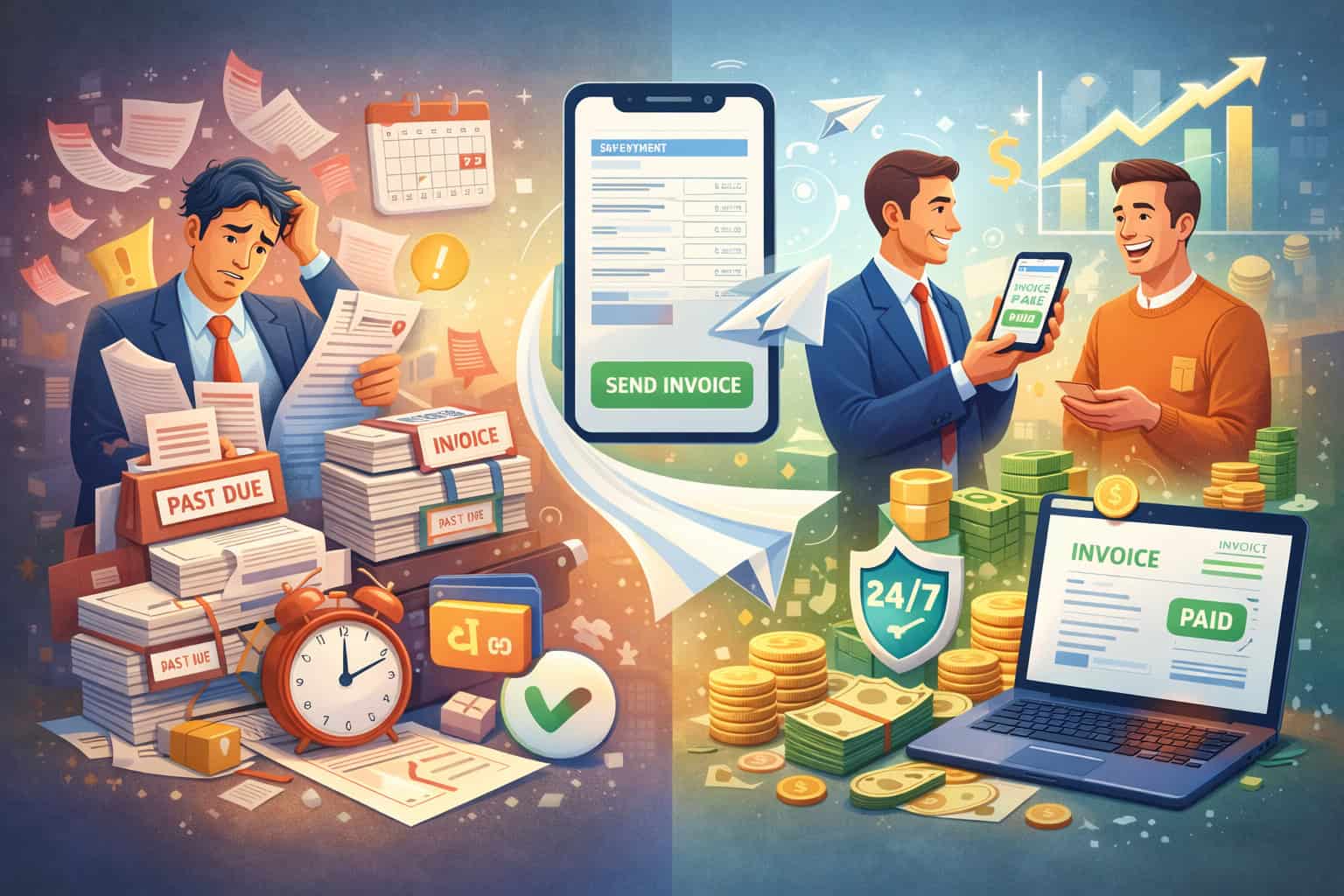
Overcoming Late Payments: How Instant Invoicing Boosts Revenue
Late payments do more than create frustration. They slow down payroll, delay hiring, limit inventory purchases, disrupt planning, and force business owners to spend too much time chasing money they have already earned.
That is why Instant Invoicing has become such an important part of modern billing. Instead of waiting hours, days, or even weeks to create and send invoices, businesses can bill customers right away, make payment easier, automate follow-up, and shorten the time between completed work and collected revenue.
For business owners, freelancers, service providers, and finance teams, the value goes beyond speed alone.
A better invoicing process improves the customer payment experience, reduces admin work, strengthens accounts receivable management, and supports steady cash flow improvement. When invoices are sent faster and paid faster, the entire business runs better.
This article explains what instant invoicing means, why late payments happen so often, and how Instant Invoice Payments, Instant Payment Invoicing, Real-Time Invoicing for Businesses, and other Fast Invoice Payment Solutions can help reduce delays.
You will also find practical examples, common mistakes to avoid, and a step-by-step checklist you can use to improve your billing workflow starting now.
What Instant Invoicing Means and Why It Matters
Instant Invoicing is the process of creating and sending an invoice as soon as a job is completed, a milestone is reached, a product is delivered, or a recurring billing cycle begins. Instead of relying on delayed manual billing, batch processing, or end-of-week admin work, the invoice goes out in real time.
In simple terms, it means there is little to no gap between the moment value is delivered and the moment a customer is asked to pay. That gap matters more than many businesses realize. The longer billing is delayed, the greater the chance of payment delays, forgotten approvals, missing paperwork, or customer confusion.
Traditional invoicing often depends on someone remembering to create the invoice later. In busy businesses, “later” can quickly become several days. That delay starts the payment clock late and hurts cash flow before the customer has even had a chance to review the bill.
Instant invoicing changes that pattern. It creates a faster and more consistent billing rhythm by connecting completed work directly to invoice generation. It often includes digital invoicing tools, payment links in invoices, automated reminders, invoice payment tracking, and multiple online invoice payments options so customers can pay right away.
This matters because faster billing supports faster revenue collection. It also improves the customer experience. Customers are more likely to pay promptly when the invoice arrives while the service is still fresh in their mind, the details are clear, and the payment process is simple.
For many businesses, instant invoicing also helps improve internal discipline. Teams become more organized around billing events, approvals, and collections. Instead of reacting to overdue balances, they start preventing payment delays from the beginning.
Instant Invoicing vs Traditional Billing Cycles
Traditional billing cycles tend to be slow because they are built around internal convenience rather than payment speed. A business might wait until the end of the week, the end of the month, or after several approvals before sending an invoice. That creates a silent delay before the customer even sees the bill.
With Instant Payment Invoicing, the invoice is triggered by an action. That action might be a completed project phase, a signed work order, a finished service call, or a subscription renewal. The invoice is created and delivered automatically or with minimal effort, reducing the chance of missed or delayed billing.
This difference has a direct effect on cash flow. If a business invoices five days earlier on average, it can often collect five days earlier too. That is a major advantage for teams trying to improve working capital and avoid gaps between expenses and incoming payments.
There is also less room for error. Traditional batch invoicing increases the risk of forgotten charges, outdated details, and bottlenecks in the invoice follow-up process. Real-time invoicing creates more accurate, timely records and helps teams spot unpaid invoices earlier.
Why Instant Invoicing Is Becoming a Core Revenue Tool
Instant invoicing is no longer just an admin upgrade. It is a revenue tool. Businesses that improve billing speed often improve collection speed, customer responsiveness, and revenue predictability at the same time.
This is especially important in environments where margins are tight and payment timing matters. A profitable business can still face pressure if cash is stuck in unpaid invoices. Real-Time Invoicing for Businesses helps bridge that gap by turning completed work into payable transactions without unnecessary delay.
It also supports better financial planning. When invoice data is updated in real time, finance teams have a clearer view of what has been billed, what is pending, and what is overdue. That visibility makes accounts receivable management more effective and supports smarter decisions about spending, forecasting, and staffing.
Businesses that adopt instant invoicing often find that it solves multiple problems at once. It reduces late payment prevention issues, shortens the billing cycle, improves customer communication, and supports billing workflow automation without making the process harder for customers.
Why Late Payments Hurt More Than Most Businesses Realize
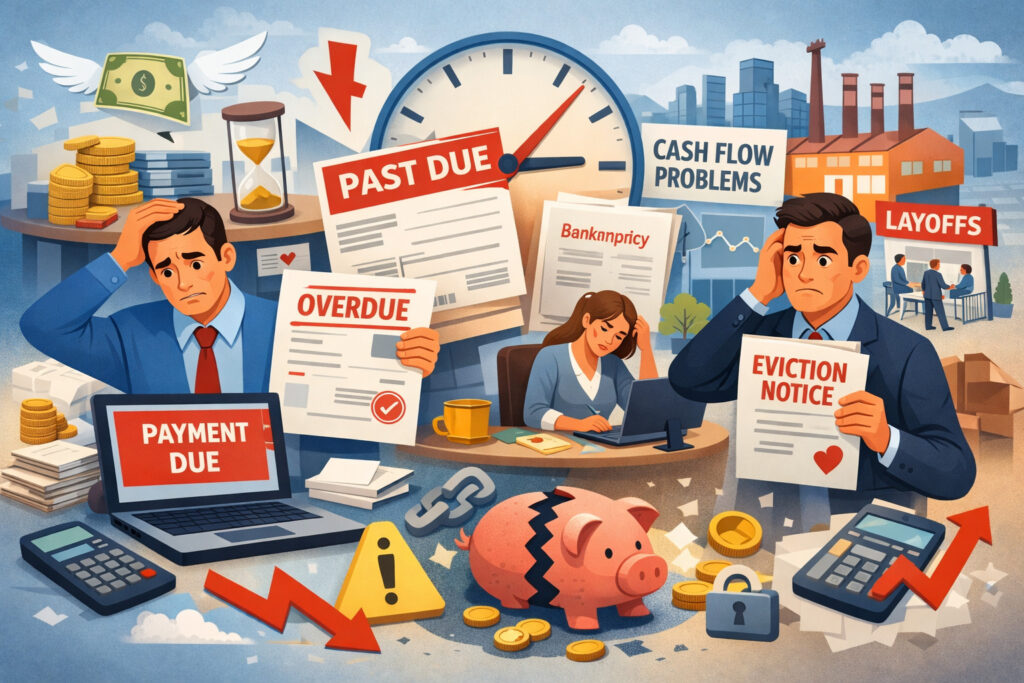
Late payments are often treated as a routine inconvenience, but their impact runs much deeper. They affect daily operations, long-term growth, team morale, and the ability to plan with confidence.
When money arrives later than expected, business owners may need to delay purchases, reduce marketing spend, pause hiring, or use reserves to cover ordinary expenses. In some cases, they may spend valuable time following up on overdue invoices instead of focusing on sales, client service, or strategy.
The hidden cost is often time. Every delayed payment creates extra admin work. Someone has to check invoice status, send reminders, answer questions, confirm receipt, and manage follow-up. That time adds up quickly, especially when the invoicing system is manual or disorganized.
Late payments also create uncertainty. If revenue is unpredictable, it becomes harder to forecast cash flow, manage accounts payable, and make confident growth decisions. Even strong businesses can feel pressure when too much money is sitting in accounts receivable rather than in the bank.
This is why late payment prevention should be viewed as part of revenue cycle optimization, not just collections. The goal is not only to chase overdue invoices more effectively. The real goal is to design a billing process that reduces the chance of delay from the start.
Instant Invoice Payments help address this by sending invoices sooner, reducing confusion, making payment easy, and creating a more consistent invoice follow-up process. When businesses remove friction before the invoice becomes overdue, they often see meaningful improvements in payment timing.
Cash Flow Problems Start Earlier Than the Due Date
Many businesses think the late payment problem starts when the due date passes. In reality, the problem often begins much earlier.
It may begin when billing is delayed after the job is done. It may begin when the invoice is incomplete, when the customer does not know who should approve it, or when the payment instructions are hard to find. By the time the invoice becomes officially overdue, the delay has already been building for days or weeks.
This is why faster invoice payments depend on more than shorter terms. A business can write “due on receipt” on every invoice, but that will not solve delays caused by manual billing, approval confusion, or poor payment options.
The earlier a business fixes these issues, the better the results. Sending invoices instantly, using invoice automation, and including clear payment links in invoices can reduce the lag before the customer even begins their payment process. That helps move revenue through the pipeline more quickly and predictably.
The Operational Ripple Effects of Slow Payments
Slow payments rarely stay inside the finance function. They spread into other parts of the business.
A service provider may delay bringing on contractors because receivables are too slow. A growing agency may hesitate to invest in software or talent because outstanding invoices are piling up. A small business may spend less on inventory, maintenance, or sales activity because too much cash is tied up in unpaid work.
There is also an emotional cost. Owners and managers can become reactive when payments are inconsistent. Instead of thinking about improvement and growth, they spend energy worrying about who has not paid yet and what expense is coming next.
That is why Fast Invoice Payment Solutions matter. They reduce friction at the front end of billing and help businesses spend less time operating defensively. With stronger digital invoicing, automated payment reminders, and invoice payment tracking, teams gain more control and a clearer view of incoming revenue.
The Most Common Causes of Late Payments
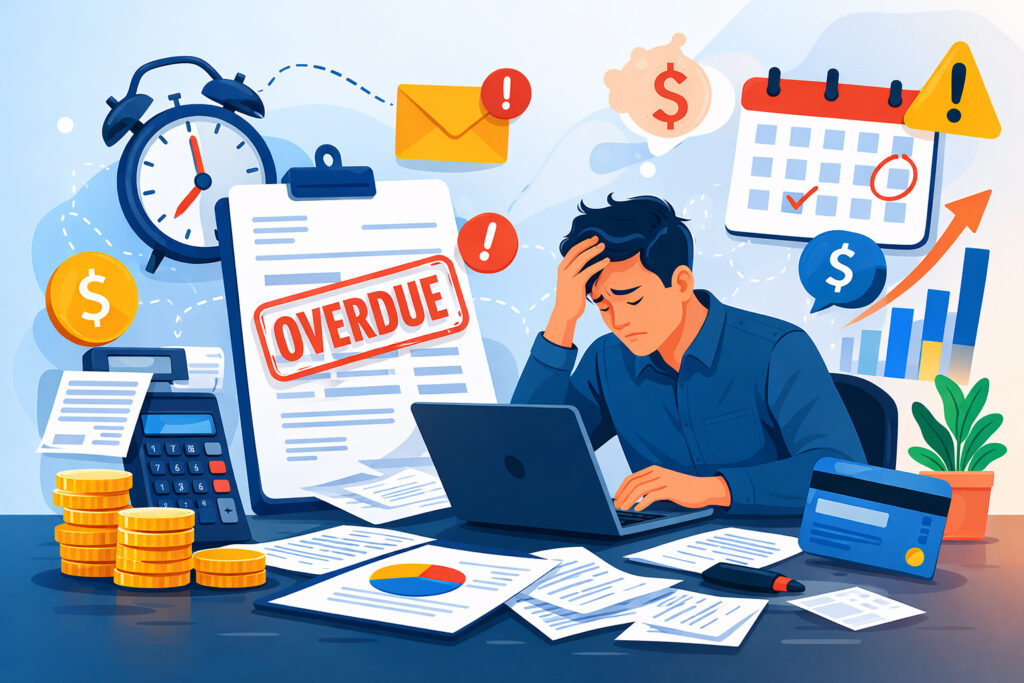
Late payments usually do not happen for one reason alone. They happen because several small delays and friction points build up across the billing process.
In many cases, customers are not refusing to pay. They are dealing with unclear instructions, approval delays, misplaced invoices, too few payment methods, or reminders that arrive too late. When businesses understand these patterns, they can improve the process instead of assuming the customer is simply irresponsible.
One major cause is delayed invoice creation. If the invoice goes out long after the work is completed, the customer may already be focused on something else. Momentum is lost, and the payment process starts late. This is a common issue in businesses that rely on manual billing or wait for someone to “catch up” on invoicing later.
Another major cause is lack of clarity. Vague invoices create hesitation. If the description is too broad, the terms are inconsistent, or the amount is not explained clearly, customers may hold the invoice while they ask questions internally. That slows payment and creates unnecessary back-and-forth.
Limited payment options are another common problem. If customers cannot pay through their preferred digital channel, or if the process requires too many steps, payment gets pushed aside. A simple payment experience often has a major effect on collection speed.
Weak follow-up also contributes to delays. Many businesses send an invoice once and hope it gets paid. Without automated payment reminders or a structured invoice follow-up process, even willing customers may overlook the invoice until much later.
Approval bottlenecks add another layer. In larger teams and even in smaller businesses, one person may receive the invoice while another person needs to approve it and a third person needs to process the payment. If the workflow is not clear, delays are almost guaranteed.
Manual Billing Delays and Poor Invoice Timing
Manual billing is one of the biggest drivers of slow payments because it introduces human delay into a process that should move quickly.
A freelancer might finish a project on Friday but wait until Tuesday to send the invoice. A contractor may complete a service call in the field but not submit billing details until the office enters them later. A finance team may wait until the end of the week to batch invoices instead of sending them as work is completed.
These delays may seem minor, but they add up. Every extra day before the invoice is sent is another day before the customer can review and pay it. That extends the billing cycle without adding any value.
Instant Invoicing solves this by compressing the time between delivery and billing. When the invoice is triggered immediately, customers can pay while the transaction details are still current and easy to verify. That improves timing and reduces the risk that the invoice gets buried or forgotten.
Unclear Terms, Missing Follow-Up, and Approval Bottlenecks
Even when invoices are sent on time, they can still be paid late if the details are unclear or the process is incomplete.
Common problems include:
- Missing due dates
- Vague service descriptions
- No clear payment instructions
- Unclear late fee policies
- No contact person for billing questions
- No reminder schedule
- Invoices sent to the wrong person
- Internal approval delays on the customer side
These issues create friction that slows down payment. Customers may set the invoice aside while they confirm the amount, ask for a revised version, or wait for internal sign-off. Without active follow-up, those small delays can become long overdue balances.
A stronger invoicing system reduces these risks. Clear invoice templates, automated reminders, approval-friendly formatting, and invoice payment tracking make it easier for customers to move the invoice through their own process without delay.
How Instant Invoice Payments Help Businesses Get Paid Faster
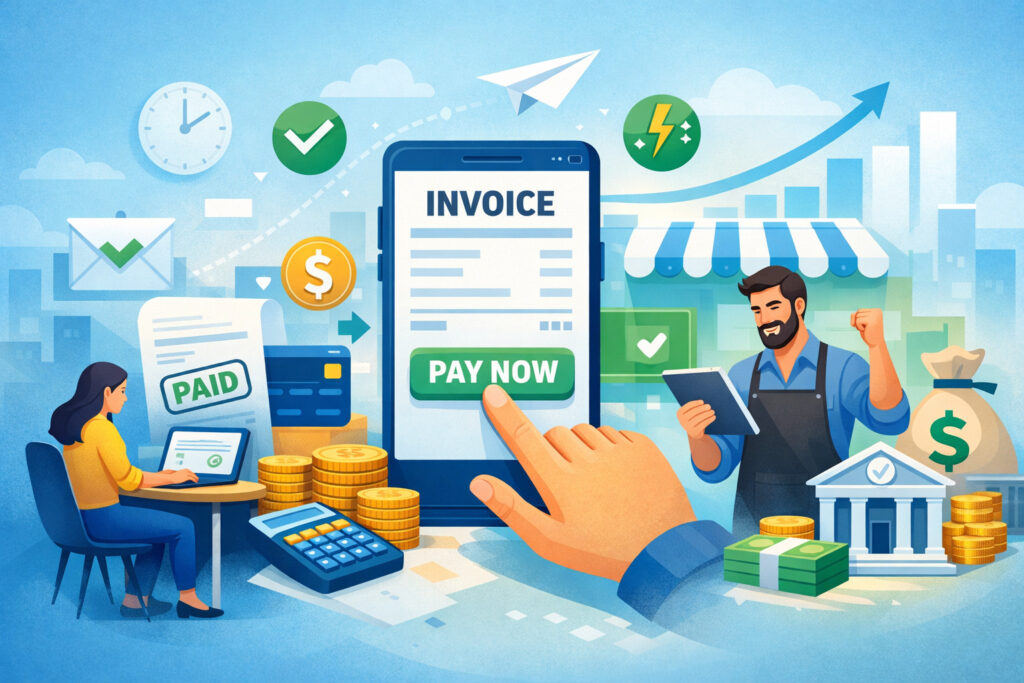
Instant Invoice Payments work because they reduce the distance between action and payment. The faster an invoice is created, delivered, reviewed, and paid, the less chance there is for delay to creep in.
This is not just about sending invoices quickly. It is about building a payment-ready billing system. That means the invoice arrives on time, includes the right information, makes payment easy, and supports follow-up without extra manual effort.
When the invoice is sent immediately after a product is delivered or a service is completed, the customer is more likely to recognize the value and act promptly. There is less confusion about what the charge is for, less delay in internal communication, and a better chance that payment becomes part of the natural closing step of the transaction.
Payment links in invoices are especially useful here. Instead of expecting customers to open a separate portal, request instructions, or manually enter banking details, the invoice includes a clear path to pay now. Reducing those extra steps often has a direct impact on collection speed.
Automated reminders strengthen the system further. Even responsible customers can forget. A timely reminder before or after the due date helps keep the invoice visible without requiring manual follow-up from your team.
These tools also improve the customer payment experience. Paying becomes easier, faster, and less frustrating. That matters because a customer who finds it easy to pay is more likely to pay on time again in the future.
Speeding Up the Path From Completed Work to Collected Revenue
Every invoice has a journey. First, the work is completed. Then the invoice is created, sent, reviewed, approved, and paid. The longer each stage takes, the longer your business waits for cash.
Fast Invoice Payment Solutions reduce delays at each point in that journey. Invoice automation helps teams send bills immediately. Digital invoicing ensures faster delivery. Clear descriptions reduce questions. Payment links support same-day invoice payment. Automated reminders keep the process moving.
This has a compounding effect. Saving one day at invoice creation, one day at review, and one day at payment adds up to a significantly faster collection cycle. Over time, that can improve liquidity, reduce collection stress, and support more stable revenue operations.
It also helps businesses develop a healthier billing culture. Teams stop viewing invoicing as an admin task to catch up on later and start treating it as an essential part of service completion and revenue collection.
Reducing Collection Delays Without Damaging Relationships
One reason some business owners avoid follow-up is that they do not want to sound pushy. That concern is understandable, especially in relationship-driven businesses.
The good news is that Instant Payment Invoicing helps reduce the need for awkward collection conversations. When invoices are sent promptly, include clear terms, and trigger automatic reminders, the process feels organized rather than confrontational. Customers receive professional prompts as part of the billing system, not personal pressure.
This protects relationships while still improving results. Customers appreciate clarity and convenience. They are less likely to feel frustrated when the invoice is timely, accurate, and easy to pay. And your team spends less time sending one-off reminder messages that may feel uncomfortable or inconsistent.
A strong process is not aggressive. It is dependable. That dependability benefits both sides.
How Instant Payment Invoicing Works in Practice
The idea of Instant Payment Invoicing sounds simple, but its real value comes from how the process is built. The best systems do not just send invoices faster. They connect invoice creation, payment options, reminders, tracking, and follow-up into one streamlined workflow.
In practice, the process usually begins with a billing trigger. That trigger might be a completed task, a delivered service, a signed approval, a recurring billing date, or a confirmed project milestone. Once that event happens, the invoice is generated immediately or with minimal manual input.
The invoice itself should be clear, accurate, and ready for payment. It includes service or product details, the amount due, due date, payment terms, and a direct payment link. Some systems also allow customers to choose from several invoice payment methods, such as card payments, transfer options, stored payment credentials, or wallet-based methods.
Once sent, the invoice enters a tracking stage. Teams can see when it was delivered, opened, viewed, and paid. If payment is not made on time, automated payment reminders can be triggered based on preset rules. This keeps the invoice follow-up process moving without requiring staff to monitor every account manually.
This kind of workflow makes a real difference because it removes avoidable delay at each step. It also creates better visibility into accounts receivable management, which helps finance teams identify patterns, follow up sooner, and forecast more accurately.
Invoice Creation, Payment Links, and Delivery Timing
The first part of instant invoicing is speed at the moment of creation. That means the invoice should be generated as close as possible to the transaction event.
For example, a consultant may send an invoice as soon as a strategy session ends. A field service technician may generate an invoice from a mobile device before leaving the customer site. A subscription business may issue a recurring invoice automatically when the billing cycle renews.
The invoice should not only be fast to create. It should be easy to act on. That is where payment links in invoices play a major role. A direct payment link removes uncertainty and reduces the number of steps the customer must take. The simpler the path, the better the odds of faster invoice payments.
Delivery timing matters too. Sending an invoice while the work is still fresh improves recognition and urgency. Waiting too long creates distance, which often leads to confusion, questions, or lower priority on the customer’s side.
Reminders, Approvals, Tracking, and Digital Payment Options
After the invoice is sent, the next challenge is keeping it moving. Many delays happen not because the customer refuses to pay, but because the invoice becomes stuck somewhere in the process.
Automated payment reminders help solve this by providing timely follow-up. A reminder can be sent shortly before the due date, on the due date, and after the due date if needed. This keeps the invoice visible and reduces the chance of it being forgotten.
Approval delays are another issue. If customers need manager approval, purchase confirmation, or internal coding before payment, the invoice should be clear and complete enough to move through that process without extra clarification. Good invoice formatting reduces the chance of avoidable questions.
Invoice payment tracking brings needed visibility. Teams can see which invoices are unpaid, which are nearing due dates, and which customers may need additional support. That insight is essential for strong accounts receivable management.
Digital payment options also matter. Customers pay faster when they can choose a convenient method. Online invoice payments reduce friction, improve the customer payment experience, and support same-day invoice payment in many cases.
The Business Benefits of Real-Time Invoicing for Businesses
Real-Time Invoicing for Businesses offers benefits that go far beyond collections. It helps businesses operate faster, plan better, and serve customers more effectively.
The most obvious benefit is improved cash flow. When invoices go out sooner and get paid sooner, businesses have more liquidity to manage expenses, invest in growth, and avoid unnecessary strain.
This is especially valuable for businesses with ongoing payroll, supplier obligations, or project expenses that arrive before customer payments do.
Another benefit is consistency. Real-time invoicing creates a steady rhythm in billing and collections. Instead of large spikes and gaps caused by delayed batch invoicing, revenue moves through the pipeline more evenly. That makes planning easier and reduces surprises.
There is also a productivity advantage. When invoicing is automated or simplified, staff spend less time on repetitive admin work. That frees them to focus on customer service, account management, or higher-value finance work. Billing workflow automation reduces manual entry, missed invoices, and duplicate effort.
The customer benefit is just as important. A clean digital invoicing experience makes it easier for customers to understand what they owe and how to pay. That creates less friction and often improves trust. Businesses that make payment simple often see stronger retention and smoother repeat transactions.
These gains are not limited to one type of business. Service firms, agencies, consultants, contractors, subscription businesses, and small operational teams can all benefit when billing becomes more immediate, trackable, and payment-ready.
Better Billing Speed, Better Customer Experience, Better Forecasting
When businesses speed up invoicing, they often discover that multiple systems improve at once.
Billing speed improves because invoices are no longer delayed by manual steps. Customer experience improves because invoices are clearer and easier to pay. Forecasting improves because finance teams can see what has been billed in real time rather than waiting for delayed updates.
This matters because invoicing sits at the center of revenue operations. It connects sales, service delivery, finance, and customer communication. If that process is slow or fragmented, the business feels it everywhere.
With e-invoicing solutions, integrated billing systems, and automated status tracking, teams can build a more reliable revenue engine. They can identify bottlenecks sooner, support faster collections, and make better operational decisions based on current data instead of incomplete records.
Why Real-Time Invoicing Supports Revenue Predictability
Revenue predictability is not only about sales volume. It is also about how quickly sold or delivered value turns into collected cash.
A business may book strong revenue on paper and still struggle if invoices are delayed or frequently paid late. Real-time invoicing closes that gap by reducing lag in the revenue cycle. The business gains a clearer view of what has been billed, what is due, and what is likely to arrive soon.
This is one of the reasons revenue cycle optimization matters so much. Faster billing creates more confidence in receivables. More confidence in receivables leads to better forecasting. Better forecasting supports better decisions about hiring, spending, pricing, and growth.
Who Benefits Most From Fast Invoice Payment Solutions
Almost every business can benefit from faster billing, but some business models feel the impact more strongly than others.
Small businesses often have the most to gain because they usually have less financial cushion. A few late invoices can create real pressure when payroll, subscriptions, rent, and supplier costs still need to be covered on time. For these teams, Fast Invoice Payment Solutions can be a major source of stability.
Freelancers also benefit because they often manage everything themselves. If invoicing is delayed, payment is delayed, and there may be no finance team to step in. Instant invoicing helps them close projects cleanly and reduce time spent chasing payments.
Service-based businesses, consultants, agencies, contractors, and field service teams rely heavily on timely billing because their work is often completed in stages or delivered continuously. If they wait too long to invoice, they can quickly build up a large amount of unbilled work.
Subscription and recurring billing businesses benefit in a different way. For them, the goal is consistency and low friction. Recurring invoices, stored payment methods, and digital reminders reduce churn risk related to billing problems and support more predictable revenue collection.
Project-based businesses also gain from milestone-based instant invoicing. Instead of waiting until the end of a long engagement, they can bill at agreed checkpoints and keep cash moving throughout the project lifecycle.
Small Businesses, Freelancers, and Service Providers
For small businesses and solo professionals, invoicing delays often happen because billing gets pushed behind client work. The owner is busy delivering services, handling operations, and managing sales, so invoicing slips down the list.
That is exactly why instant invoicing matters. The less effort it takes to send a professional invoice, the more likely it is to happen right away. With digital invoicing tools and mobile invoicing options, a business can create and send a bill from almost anywhere.
This is especially helpful for:
- Freelancers billing by project or retainer
- Consultants charging after sessions or milestones
- Agencies invoicing monthly service fees
- Contractors billing after completed work
- Field service businesses closing jobs on-site
In each case, faster billing creates a cleaner handoff between service delivery and payment. That improves cash flow and reduces the mental load of trying to remember what still needs to be billed.
Recurring Billing, Project Billing, and Multi-Step Approval Models
Businesses with recurring invoices and project-based billing often face a different challenge. Their billing cycles can be structured, but still slow because approvals, documentation, or invoice handoffs are inconsistent.
For recurring billing models, automation is key. Recurring invoices should be generated on schedule, sent automatically, and paired with convenient payment methods. This reduces missed billing events and supports smoother renewal collections.
For project billing, milestone-based instant invoicing can prevent long waits between delivery and payment. Instead of invoicing only at the end, businesses can bill as work progresses. That improves liquidity and lowers exposure if a client becomes slow-paying later.
For customers with multi-step approval processes, invoice clarity and tracking become even more important. A well-structured invoice that includes all needed references, terms, and payment instructions is more likely to move quickly through internal review.
Practical Strategies to Speed Up Payments and Reduce Delays
The best way to reduce late payments is to remove friction before the invoice ever becomes overdue. That means improving the timing, structure, and follow-up around billing.
One of the most effective strategies is to send invoices immediately. Do not wait until the end of the week if the work is complete today. Quick delivery starts the payment cycle sooner and reduces the chance of forgotten details.
Another strategy is to simplify the payment process. Customers should not have to search for instructions, ask for banking details, or log into a complicated portal unless necessary. Payment links in invoices and multiple online invoice payments options make it easier to pay on the spot.
Improving invoice clarity also matters. Every invoice should clearly show what was delivered, how much is due, when it is due, and how to pay. If the invoice needs internal approval on the customer side, include any job references, contact names, or supporting details that help it move through that process smoothly.
Automated payment reminders are another essential tool. A reminder schedule removes the need to manually follow up on every invoice and helps maintain a professional, consistent collections process.
Businesses should also use invoice payment tracking to monitor patterns. If certain invoice types, customers, or teams consistently cause delays, that information can guide process improvements.
Send Invoices Immediately and Make Payment Easy
Speed matters, but convenience matters just as much. A quickly sent invoice can still be paid late if the customer faces friction when trying to complete the payment.
That is why the invoice itself should support action. A strong invoice includes:
- A clear description of the work or product
- A simple due date and payment term
- The amount due without confusion
- Easy-to-find payment instructions
- A direct payment link
- Contact details for billing questions
When the customer can review and pay at the same moment, collection speed often improves dramatically. This is one reason same-day invoice payment becomes much more realistic with digital billing tools.
Use Automation, Reminders, and Payment Tracking
Automation helps businesses build consistency into the invoice process. That consistency is valuable because it reduces missed steps and prevents billing from depending on memory or workload.
Useful automation features include:
- Automatic invoice generation after job completion
- Recurring invoices for repeat billing
- Automated payment reminders before and after due dates
- Invoice payment tracking dashboards
- Status alerts for viewed, unpaid, or overdue invoices
- Integrated billing systems tied to service or sales workflows
These features support stronger accounts receivable management because they make invoice performance visible and actionable. Teams can focus on exceptions rather than manually monitoring every bill.
When businesses combine automation with good invoice design and flexible payment methods, they create a system that supports faster invoice payments without adding complexity for customers.
The Role of Invoice Automation, Mobile Tools, and Integrated Billing Systems
Invoice automation is one of the most practical ways to reduce payment delays because it removes repetitive manual tasks from the billing process. Instead of relying on someone to remember every step, the system handles routine actions based on rules and triggers.
This can include generating invoices automatically, sending recurring invoices on a schedule, delivering reminders at set intervals, updating invoice status after payment, and syncing billing activity with accounting or service records. Each of these steps reduces admin time and lowers the chance of missed revenue.
Mobile invoicing adds another layer of speed. Businesses that work on-site, in the field, or on the move can create and send invoices as soon as the work is done. That is especially useful for contractors, repair teams, delivery-based service providers, and independent professionals who do not want to wait until they return to an office.
Integrated billing systems are equally important. When invoicing is connected to scheduling, customer records, job completion data, or accounting software, there is less duplicate entry and better visibility across the revenue cycle. That supports stronger billing workflow automation and more accurate invoice payment tracking.
These tools do not need to make the process more complicated. In fact, their main purpose is the opposite. They help businesses move faster while staying accurate, organized, and responsive.
How Automation Improves Accuracy and Follow-Through
Manual invoicing creates opportunities for delay, but it also creates opportunities for mistakes. A rushed invoice may contain the wrong amount, missing line items, or unclear notes. Those errors can stall approval and create payment disputes.
Invoice automation improves accuracy by using templates, predefined rates, customer records, and linked service data. This helps teams send cleaner invoices with fewer omissions and fewer corrections. That is valuable not only for faster payment, but also for customer trust.
Automation also improves follow-through. Businesses often know they should send reminders, but when workloads increase, reminders get delayed or skipped. Automated payment reminders ensure that follow-up happens consistently, which supports late payment prevention without adding daily admin burden.
Why Mobile Invoicing and System Integration Matter
Mobile invoicing is about speed at the point of service. If a job is completed in the field, the invoice should not have to wait for office entry later. Creating invoices on-site can dramatically reduce billing lag and improve the odds of fast payment.
System integration matters because billing works better when it is connected to the rest of the business. If your invoicing tool talks to your scheduling system, customer records, and reporting tools, the process becomes faster and more reliable.
Teams can see what has been delivered, what has been billed, and what is still unpaid without jumping between disconnected systems.
This kind of integration supports better revenue cycle optimization and gives finance teams stronger data for managing receivables and forecasting incoming cash.
Real-World Examples of Instant Invoicing in Different Business Models
The value of instant invoicing becomes easiest to see in practical use. Different businesses use it in different ways, but the underlying goal is the same: bill fast, reduce friction, and improve payment timing.
A freelancer may send an invoice immediately after delivering final files. An agency may trigger monthly service invoices automatically at the start of each billing cycle.
A field service technician may generate an invoice from a mobile device before leaving the site. A subscription business may rely on recurring invoices with automated reminders and stored payment methods.
In each case, the billing process supports rather than delays revenue collection. Instead of chasing payments later, the business builds a smoother process from the start.
These examples also show that instant invoicing is not limited to large companies with complex finance teams. In many cases, it is even more valuable for smaller operations because it reduces manual workload and helps owners stay ahead of cash flow pressure.
Freelancers, B2B Service Providers, and Field Service Businesses
A freelancer finishing a branding project often waits until the next admin block to send an invoice. That delay may only be two days, but it starts the payment cycle two days late. If the invoice is sent immediately with a payment link, the client can review and pay while project momentum is still high.
A B2B service provider may complete a monthly deliverable package and automatically issue the invoice the same day. With clear terms, a digital payment option, and an automated reminder schedule, collections become more predictable and less manual.
A field service business benefits from mobile invoicing because the technician can confirm the work, capture approval, and send the invoice before leaving the job site. That reduces office lag, improves documentation, and increases the chance of prompt payment.
Subscription Businesses and Project-Based Invoicing
For subscription businesses, billing needs consistency more than anything else. Recurring invoices should go out on time every cycle, with smooth payment options and quick follow-up if a payment fails or is delayed. This protects revenue and helps reduce friction in the customer relationship.
Project-based businesses often benefit from milestone billing. Instead of waiting until the project is fully complete, they can invoice after key phases. That helps spread payment risk, improve cash flow, and keep revenue aligned with work progress.
Common Invoicing Mistakes That Lead to Late Payments
Many late payments are preventable, but only if businesses recognize the habits that create delay.
One common mistake is sending vague invoices. If the customer cannot quickly understand what they are paying for, they may delay payment while asking for clarification. Even small questions can hold up the process.
Another mistake is delaying billing. Businesses sometimes focus on service delivery and postpone invoicing until later. That hurts cash flow and sends the message that payment urgency is low.
Skipping reminders is another frequent issue. Without automated payment reminders or a clear invoice follow-up process, invoices are easier to forget. Many customers need a prompt, especially when juggling multiple priorities.
Offering too few payment methods is also a problem. If the invoice only supports one inconvenient option, some customers will postpone payment simply because the process feels cumbersome.
Finally, many businesses make customers chase instructions. If payment details are buried in an email, spread across attachments, or missing entirely, the payment experience becomes frustrating. Friction slows action.
Vague Invoices, Delayed Billing, and Weak Follow-Up
A vague invoice creates doubt. A delayed invoice creates inertia. Weak follow-up creates silence. Together, those three problems are enough to slow collections in almost any business.
A strong invoice should answer the customer’s basic questions before they ask:
- What is this for?
- Why is the amount correct?
- When is it due?
- How do I pay for it?
- Who do I contact if I have a question?
If those answers are unclear, delays become more likely. Pair that with late invoice delivery and inconsistent reminders, and even good customers may end up paying late.
Too Few Payment Options and Poor Customer Payment Experience
The easier it is to pay, the faster many customers will do it. If businesses offer only limited options or create a payment process with too many steps, they increase the chances of delay.
The customer payment experience matters because payment is part of the overall service relationship. A business can do excellent work and still create friction at the final step if the invoicing process is clunky.
Strong online invoice payments tools reduce this friction by offering flexible, digital payment methods and a smoother path from invoice receipt to completed payment.
A Step-by-Step Checklist for Implementing Instant Invoicing
Improving invoicing does not require a complete overhaul overnight. Most businesses can make meaningful progress by tightening one part of the process at a time.
Start by reviewing your current billing timeline. Measure how long it takes between completed work and invoice delivery. If that gap is more than a few hours in most cases, there is room to improve.
Next, standardize your invoice template. Make sure every invoice includes clear line items, due dates, payment terms, payment instructions, and contact details. Remove anything that creates confusion.
Then add convenience. Include payment links in invoices and expand invoice payment methods where possible. The goal is to reduce effort for the customer.
Set up automation where it matters most. Use automatic invoice generation, recurring invoices where needed, and automated payment reminders to support consistent follow-up.
Finally, track results. Monitor billing speed, payment timing, overdue rates, and common customer questions. The best invoicing process is one that keeps improving over time.
Implementation Checklist
- Measure the average time between work completion and invoice delivery
- Identify where manual billing delays happen
- Standardize invoice formatting and payment terms
- Add direct payment links to invoices
- Offer convenient digital payment options
- Automate reminders before and after due dates
- Use invoice payment tracking to monitor status
- Set up recurring invoices for repeat billing
- Enable mobile invoicing if work happens on-site
- Integrate invoicing with customer or accounting systems
- Review late-paid invoices monthly for patterns
- Refine the invoice follow-up process based on real results
FAQ
Q.1: What is instant invoicing?
Answer: Instant invoicing is the process of creating and sending an invoice immediately after a service is completed, a product is delivered, a milestone is reached, or a billing cycle begins. It reduces delays between delivery and billing so customers can review and pay faster.
Q.2: How does instant invoicing help reduce late payments?
Answer: It helps by removing unnecessary delays at the start of the billing cycle. When invoices are sent quickly, include clear terms, and offer easy payment options, customers are more likely to pay on time. Automated reminders and invoice tracking also help prevent invoices from being forgotten.
Q.3: What is the difference between instant invoicing and regular invoicing?
Answer: Regular invoicing is often delayed by manual admin work or batch billing schedules. Instant invoicing happens in real time or very close to the transaction event. That faster timing helps improve cash flow and reduce collection delays.
Q.4: Can small businesses benefit from instant invoice payments?
Answer: Yes. Small businesses often benefit the most because they have less room for cash flow delays. Faster billing, digital payment options, and automated reminders can reduce admin work and improve payment timing without requiring a large finance team.
Q.5: What features should a good instant invoicing system include?
Answer: Look for features such as digital invoicing, payment links in invoices, multiple invoice payment methods, automated payment reminders, invoice payment tracking, recurring invoices, mobile invoicing, and integration with billing or accounting systems.
Q.6: Do payment links really make a difference?
Answer: Yes. Payment links reduce friction by giving customers a direct way to pay from the invoice itself. Fewer steps usually lead to faster action and a better customer payment experience.
Q.7: How often should businesses send invoice reminders?
Answer: A common approach is to send one reminder before the due date, one on the due date, and one or more after the due date if payment is still outstanding. The exact timing depends on your billing cycle, but consistency is important.
Q.8: Is instant invoicing useful for project-based work?
Answer: Yes. Project-based businesses can use instant invoicing at milestones rather than waiting until the entire project is complete. This helps improve cash flow and reduces the risk of large unpaid balances building up over time.
Q.9: What are the biggest mistakes that slow down invoice payments?
Answer: Common mistakes include delaying billing, sending vague invoices, skipping reminders, offering too few payment options, and making customers search for payment instructions. Each of these adds friction and increases the chance of late payment.
Q.10: How can a business start improving invoicing right away?
Answer: Start by sending invoices sooner, making them clearer, adding direct payment options, and setting up automated reminders. Even small improvements in timing and convenience can lead to noticeably faster invoice payments.
Conclusion
Late payments are rarely just a customer problem. More often, they are the result of slow billing, unclear invoices, limited payment options, inconsistent follow-up, or avoidable approval friction.
Instant Invoicing helps businesses solve those problems at the source. By sending invoices immediately, simplifying how customers pay, automating reminders, and improving invoice payment tracking, businesses can shorten the path from completed work to collected revenue.
The result is more than quicker payments. It is stronger cash flow improvement, better accounts receivable management, less admin burden, and a more professional customer payment experience.
Whether you run a small service business, freelance operation, growing agency, field service team, or recurring billing model, the principles are the same: bill quickly, make payment easy, and follow up consistently.
The businesses that get paid faster are often not the ones working the hardest to chase money later. They are the ones building better billing systems from the beginning.
With the right approach to Instant Invoice Payments, Instant Payment Invoicing, Real-Time Invoicing for Businesses, and other Fast Invoice Payment Solutions, late payments become easier to prevent and revenue becomes easier to predict.