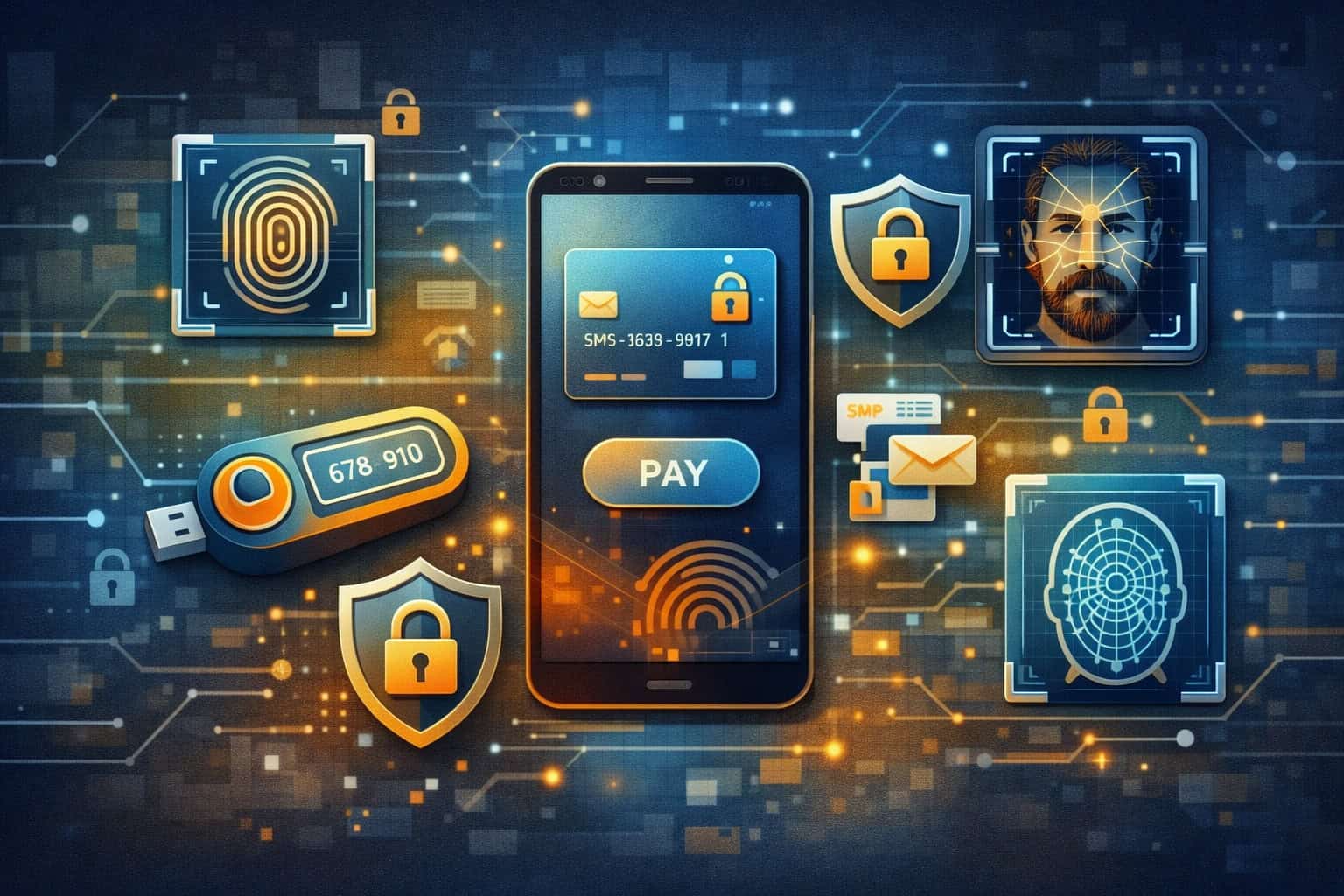
Secure Authentication Methods for Mobile Payment Apps
Mobile payment apps live at the intersection of convenience and high-stakes risk. Users expect instant access to balances, cards, and transfers, while attackers see a single login as a doorway to money movement, identity data, and stored payment credentials.
That’s why secure authentication methods for mobile payment apps must do more than “verify a password.” They need to stop phishing, neutralize device theft, detect automated abuse, and protect high-risk actions like adding a new bank account or sending a large transfer.
Modern authentication is also changing fast. Industry guidance increasingly emphasizes phishing-resistant authentication, stronger multi-factor controls, and better alignment between security and user experience.
NIST’s latest Digital Identity Guidelines (SP 800-63-4) highlight updated threat models and options for stronger authentication, especially against modern attack patterns. Meanwhile, the payments ecosystem continues tightening security requirements around access control and MFA in card-data environments under PCI DSS v4.x timelines.
This guide explains the most effective secure authentication methods for mobile payment apps, how they work, where they fail, and how to combine them into a layered, future-ready approach—without destroying conversion rates.
What “Secure Authentication” Really Means in a Mobile Payment App
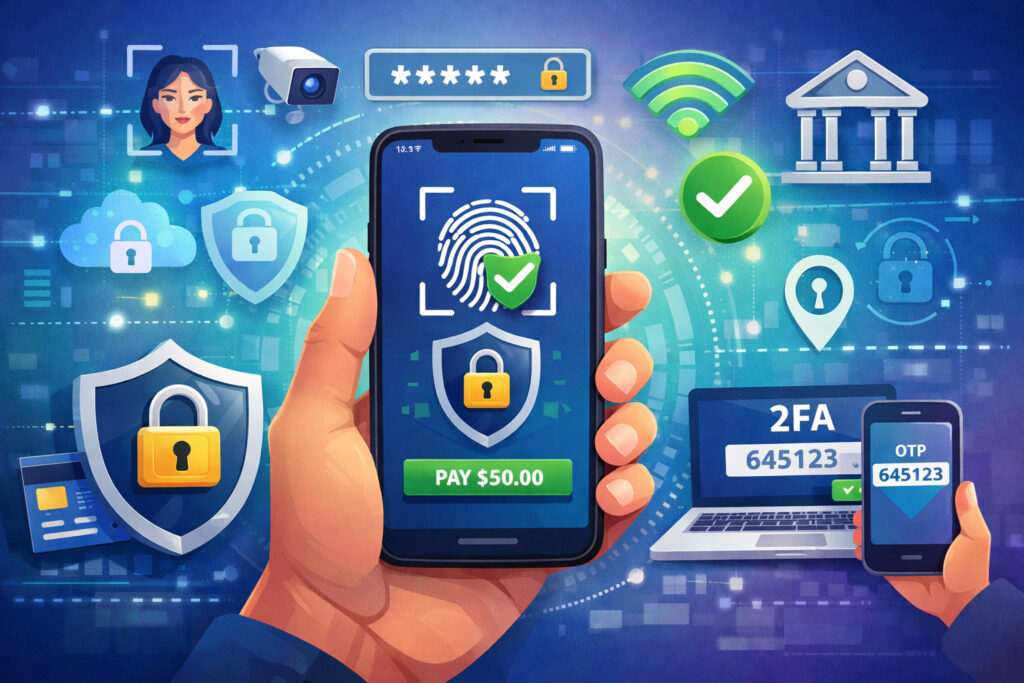
Authentication in a mobile payment app is not a single screen. It’s a full lifecycle: enrollment, sign-in, session continuation, step-up checks, and transaction approval.
When you design secure authentication methods for mobile payment apps, you’re protecting against multiple attacker paths: credential stuffing, SIM swaps, malware overlays, push fatigue, device takeovers, and social engineering.
A strong authentication strategy answers three questions reliably: Who is this user? (identity binding), are they in control right now? (proof of possession/biometric/PIN), and is this action consistent with legitimate behavior? (risk and context).
NIST’s digital identity framework reinforces the idea that assurance depends on both the authenticator and the overall process, not just a password rule.
In payments, the “right” level of authentication depends on the risk of the action. Viewing recent transactions isn’t the same as adding a new payee, changing the phone number, or cashing out to an external account.
Secure authentication methods for mobile payment apps therefore work best when they’re adaptive: frictionless for low risk, and decisively stronger when risk increases.
Finally, security must survive real life. Users lose phones. They upgrade devices. They travel. They forget passwords. The best secure authentication methods for mobile payment apps are the ones users can actually complete safely—while attackers can’t scale.
Threat Models You Must Design Against

Before choosing secure authentication methods for mobile payment apps, it helps to understand what you’re defending. Most payment-app losses don’t come from “Hollywood hacking.” They come from repeatable playbooks that scale.
Credential stuffing is still common: attackers reuse leaked usernames/passwords across apps. If your app accepts passwords without strong rate limits and risk checks, automated bots will test thousands of combos per hour.
Phishing is equally dangerous because it bypasses password complexity—users willingly hand over secrets. That’s one reason phishing-resistant approaches like passkeys are accelerating.
SIM swap and SMS interception attacks target phone-number-based authentication. Attackers socially engineer mobile carriers or exploit weak account recovery to capture OTP codes. Push notification fatigue (a.k.a. MFA bombing) targets apps that approve logins via “Approve/Deny” prompts with poor context.
On mobile, you also face device-level threats: malware overlays, accessibility abuse, clipboard sniffing, screen scraping, and stolen devices with weak lock screens. Your secure authentication methods for mobile payment apps must assume that some devices are compromised and that attackers will try to move money quickly before detection.
This is why modern payment security often combines strong authentication with transaction controls, device binding, and behavioral risk scoring.
Core Building Blocks: Something You Know, Have, and Are
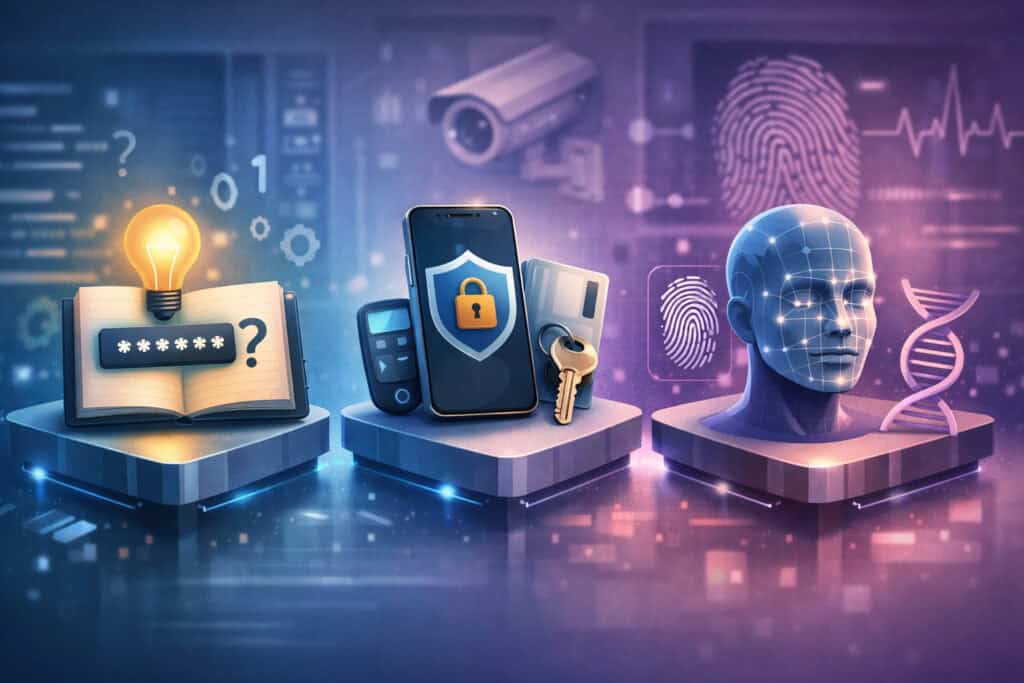
Most secure authentication methods for mobile payment apps are built from three classic factors: something you know (PIN/password), something you have (device, hardware key), and something you are (biometrics). The trick is combining them in a way that resists modern attacks.
“Something you know” can be copied, phished, guessed, or reused. “Something you have” is stronger when it’s cryptographically bound to the app and protected by secure hardware.
“Something you are” is powerful for usability, but must be implemented carefully (local biometric match, not server-stored biometrics). Strong mobile authentication typically uses at least two factors for sensitive actions, with a bias toward phishing-resistant methods.
NIST’s assurance concepts emphasize that security depends on both the authenticator type and how it’s used (e.g., anti-replay, verifier impersonation resistance, and secure recovery). Payments security standards also increasingly expect MFA in environments accessing sensitive payment data and systems, pushing the ecosystem toward better multi-factor design.
In practice, secure authentication methods for mobile payment apps should treat passwords as a legacy fallback—not the crown jewel.
Passkeys and Passwordless Login (FIDO/WebAuthn)
Passkeys are one of the most important upgrades in secure authentication methods for mobile payment apps because they are designed to be phishing-resistant.
Instead of a shared secret (password), passkeys use public-key cryptography: the service stores a public key, and the user’s device protects the private key. Authentication happens by proving possession of that private key, usually unlocked with Face ID, fingerprint, or device PIN.
The biggest security advantage is origin binding: a passkey created for your real domain/app can’t be replayed on a fake phishing site. That single change eliminates an enormous class of payment-app account takeover attacks. It also reduces credential stuffing risk because there’s no password to reuse.
On iOS, passkeys integrate with platform credential storage and authentication APIs, enabling passwordless sign-in that feels natural to users. On Android, Google’s Credential Manager unifies passkeys, passwords, and federated sign-in under one consistent UI flow, making adoption simpler for developers and less confusing for users.
For mobile payment apps, passkeys shine in two places:
- Primary login for returning users (fast, low friction, high security).
- Step-up authentication before risky actions (add bank, change device, high-value transfer).
Biometrics Done Right: Face, Fingerprint, and Local Matching
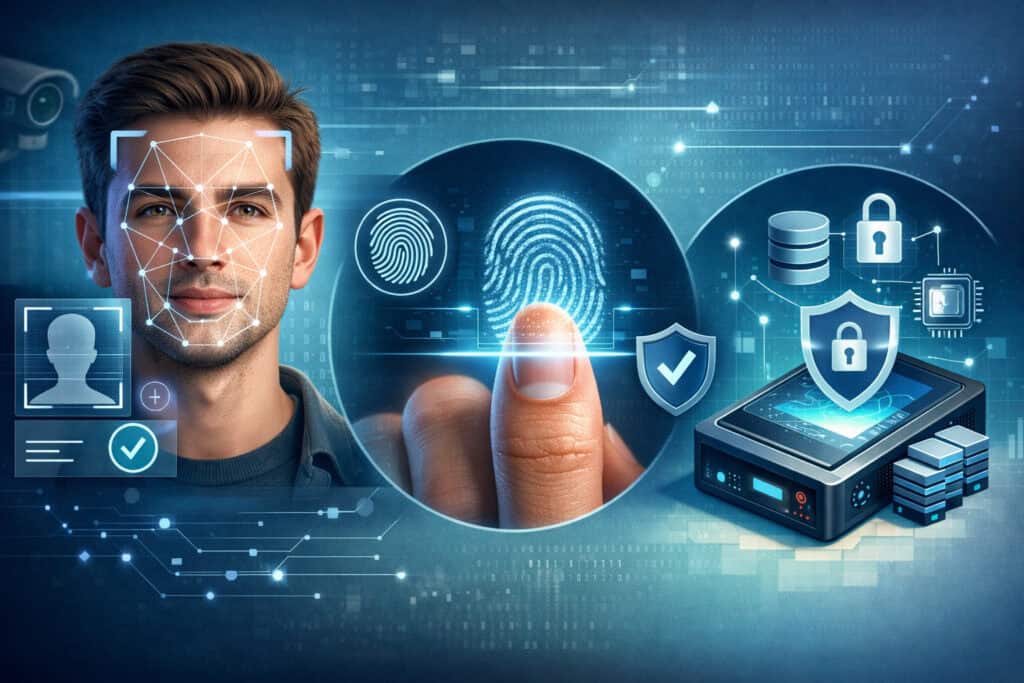
Biometrics are often the most user-friendly secure authentication methods for mobile payment apps—but only when used correctly. The safest approach is local biometric matching on the device, where the biometric template never leaves the secure hardware boundary. Your app simply asks the OS, “Is the user present and verified?” and receives a yes/no.
This matters because storing biometric data on your servers is both risky and unnecessary for most payment use cases. If biometric templates are stolen, they can’t be “rotated” like passwords.
By relying on platform biometrics, you inherit strong protections like secure enclaves/TEE-backed storage, system-level anti-tampering, and user enrollment controls.
Biometrics should also be paired with sensible fallbacks. Users may have wet fingers, face-coverings, injuries, or accessibility needs. A secure fallback is typically device PIN (OS-level) rather than an in-app “security question.”
Secure authentication methods for mobile payment apps should treat knowledge-based questions as weak recovery mechanisms because they’re often guessable or obtainable through social engineering.
Where biometrics add the most value is step-up: confirming identity before money movement, viewing full card numbers, or changing security settings. When combined with device binding and risk checks, biometrics provide high security with minimal user friction.
PINs and App-Level Secrets: Still Useful, but Easy to Get Wrong
A short PIN can be a practical layer in secure authentication methods for mobile payment apps, especially as a quick “re-auth” method after a short lock timeout. But PIN security depends on controls around it.
A 4-digit PIN has only 10,000 combinations. Without strict rate limiting and secure storage, it’s brute-forceable. That means you must implement:
- Strong attempt limits (with exponential backoff and eventual lock).
- Secure storage using platform key storage and encryption.
- Protection against overlay attacks (e.g., malicious apps capturing taps).
PINs are best when they’re not the only factor. A strong pattern is: device possession + biometric/PIN for user presence. Where possible, prefer OS-level device credentials for unlocking secure keys rather than maintaining a separate in-app PIN vault.
For payment apps, PINs can be a fallback for biometric failure and a method for quick verification when the risk score is low. But for high-risk actions, secure authentication methods for mobile payment apps should step up to stronger checks (passkey confirmation, biometric + device binding, or cryptographic transaction signing).
One-Time Passwords (OTP): SMS vs TOTP vs Email
OTP is still widely used, but not all OTP is equal. In mobile payment apps, OTP often appears during login, new device enrollment, or account recovery. It’s familiar, and it works—but it can also be one of the easiest layers for attackers to bypass at scale.
- SMS OTP is the weakest common OTP method because of SIM swaps, number porting, and SS7/interception risks. It’s also vulnerable when the attacker already controls the device or can trick the user into forwarding codes. For that reason, SMS should be a last-resort fallback, not the primary MFA for a payment app.
- TOTP (authenticator apps) is stronger than SMS because it’s not tied to a carrier. But it can still be phished if the user types the code into a fake prompt, and it can be stolen by malware or real-time phishing proxies.
- Email OTP is only as strong as the email account, and many consumers have weak email protection. In payments, email OTP is best for low-risk verification, not for high-value actions.
If you use OTP in secure authentication methods for mobile payment apps, the key is to treat it as temporary and risk-gated:
- Use OTP mainly for bootstrap or recovery, not daily login.
- Add device binding and fraud checks around it.
- Prevent real-time relay attacks with transaction context and step-up methods.
Push-Based MFA: Powerful, but Must Be Phishing-Resistant
Push prompts (“Approve this login?”) can be smooth—until they aren’t. Attackers exploit weak push MFA through repeated prompts, hoping the user clicks approve out of annoyance or confusion.
To make push MFA a legitimate part of secure authentication methods for mobile payment apps, implement number matching or strong contextual prompts. Instead of “Approve/Deny,” show:
- The device type and approximate location
- The action being requested (login vs transfer vs add bank)
- A number code that must match what’s shown on the login screen
This reduces accidental approvals and makes social engineering harder. Also apply rate limits: if a user gets too many prompts, shut it down and force a stronger step-up method.
Push MFA works best for known devices and known users. For new devices, high-risk geographies, or suspicious networks, secure authentication methods for mobile payment apps should escalate to passkeys/biometrics with cryptographic proof of possession, not a simple tap-to-approve.
Device Binding and Cryptographic Proof-of-Possession
Device binding is an underappreciated pillar of secure authentication methods for mobile payment apps. The idea is simple: once a user enrolls a device, the app generates cryptographic keys stored in secure hardware (where available).
Future logins and sensitive actions can require signatures from that device key, proving the request came from the enrolled device.
This reduces risk even when passwords or OTP are compromised. An attacker who only has a password can’t easily authenticate from an unknown device without triggering additional enrollment checks.
Device binding also helps detect emulators, bots, and cloned app environments (especially when combined with attestation signals and server-side anomaly detection).
The best payment apps tie device binding into step-up workflows:
- First-time login on a new phone triggers additional verification
- High-value transfers require device key confirmation + biometric
- Security setting changes require re-auth and device proof
This approach aligns with the broader industry move toward phishing-resistant authentication and stronger authenticators, as described in modern digital identity guidance.
Risk-Based and Adaptive Authentication (RBA)
Risk-based authentication (sometimes called adaptive authentication) is how you keep security high without punishing every user on every login. In payments, this is essential.
RBA evaluates context signals like:
- Device fingerprint and device binding status
- IP reputation, proxy/VPN signals, impossible travel
- Behavioral patterns (typing rhythm, navigation flow)
- Transaction history, velocity, and payee novelty
- Account changes (new email, new phone, password reset)
If risk is low, you allow fast biometric or passkey login. If risk spikes, you step up: require a passkey confirmation, OS biometric re-auth, or additional verification. This is one of the most practical secure authentication methods for mobile payment apps because it matches friction to risk.
RBA is also how you defend against automated credential stuffing at scale. Even if an attacker has valid credentials, they often fail device and behavior checks or trigger velocity and anomaly thresholds.
Transaction Authentication: Approving the Money Move, Not Just the Login
A payment app isn’t “secure” if login is strong but transactions can be hijacked. That’s why secure authentication methods for mobile payment apps must include transaction authentication—a separate confirmation step for sensitive actions.
Transaction authentication can look like:
- Biometric “confirm transfer” prompts
- Passkey confirmation for high-value actions
- Cryptographic signing of transaction details (amount, destination)
- Out-of-band confirmation for risky changes (with strong safeguards)
The key is binding approval to what is being approved. If your app asks “Approve?” without showing the transfer details, malware can trick users into approving the wrong thing.
A strong pattern is “step-up + display + confirm.” Display the recipient, amount, and funding source. Confirm with biometrics or passkey. Then sign and send. This makes man-in-the-app attacks harder and reduces social engineering success.
Secure Session Management: Tokens, Timeouts, and Re-Auth
Even perfect login doesn’t help if sessions are easy to steal. Secure authentication methods for mobile payment apps must extend into session controls.
Best practices include:
- Short-lived access tokens with refresh rotation
- Device-bound tokens where possible
- Automatic lock on app backgrounding (configurable)
- Re-authentication for sensitive screens and settings
- Secure storage of tokens using platform-protected storage
Session design should assume that a device can be lost or briefly accessed. A payment app should not remain fully authenticated indefinitely. “Soft sessions” for browsing can be separate from “hard sessions” required for transfers.
Standards-based mobile security guidance like OWASP MASVS emphasizes consistent controls around authentication and session management to prevent common mobile attack paths.
Account Recovery: The Most Attacked Workflow in Payments
Attackers love account recovery because it’s where security gets “flexible.” The harsh truth: many payment apps are easier to hijack through recovery than through login.
Secure authentication methods for mobile payment apps must treat recovery as a high-risk transaction. That means:
- Avoiding knowledge-based questions (too guessable)
- Using step-up verification for recovery actions
- Applying waiting periods and user alerts for sensitive changes
- Requiring strong confirmation before changing phone/email
- Locking down recovery after suspicious activity
Recovery should also respect the reality of device loss. If passkeys or device keys are used, you need a safe path to regain access. Platform ecosystems are improving recovery experiences for passkeys and credential portability, which helps reduce reliance on weaker recovery methods.
Compliance and Security Standards That Shape Authentication Choices
Even if you’re not directly regulated like a bank, the payments ecosystem pushes security expectations downward through network rules, partner requirements, and audits. If your architecture touches card data environments, PCI DSS v4.x continues to influence authentication controls and MFA expectations.
At the same time, widely used frameworks and best practices help teams implement secure authentication methods for mobile payment apps consistently:
- NIST Digital Identity Guidelines (SP 800-63-4) for modern authentication and assurance thinking
- OWASP MASVS as a practical standard for mobile app security verification
- Platform guidance for passkeys on iOS and Credential Manager on Android
The goal isn’t “compliance as security.” The goal is using these standards to avoid predictable mistakes, align with ecosystem expectations, and reduce friction during partnerships and reviews.
Recommended Authentication Stack for Modern Mobile Payment Apps
If you want a practical blueprint, here’s a layered approach that fits most payment apps and scales well:
- Primary sign-in: Passkeys first: Offer passkeys as the default for returning users. Keep passwords as fallback only.
- Step-up: Biometrics or passkey confirmation: Use OS biometrics for quick re-auth. Require passkey confirmation for high-risk actions.
- Device binding: Cryptographic keys + risk scoring: Bind devices during enrollment and require device proof for sensitive actions.
- Adaptive controls: Risk-based step-up: Let low-risk users move fast. Escalate friction for anomalies.
- Recovery: Strong, delayed, and transparent: Use secure recovery paths, user alerts, and waiting periods for major changes.
This stack gives you secure authentication methods for mobile payment apps that defend against phishing, stuffing, SIM swap abuse, and stolen devices—while keeping daily usage smooth.
FAQs
Q.1: What is the most secure authentication method for mobile payment apps today?
Answer: For most consumer use cases, passkeys (FIDO/WebAuthn) combined with device biometrics provide the strongest blend of security and usability. Passkeys are designed to be phishing-resistant and remove password reuse risks.
For step-up actions, pairing passkey confirmation with device binding and risk checks creates one of the strongest secure authentication methods for mobile payment apps currently available.
Q.2: Are SMS one-time codes still acceptable for payment apps?
Answer: SMS OTP can still be used, but it should be treated as a fallback, not the primary MFA. SIM swap and number porting attacks make SMS weaker than app-based or cryptographic methods.
Secure authentication methods for mobile payment apps increasingly prioritize phishing-resistant approaches and stronger device-based factors, with SMS reserved for edge cases or low-risk verification.
Q.3: How do I add strong authentication without hurting sign-ups and conversion?
Answer: Use adaptive authentication. Keep onboarding friction low, then encourage passkey setup after the first successful login or after initial funding. Use step-ups only for risky actions. This way, secure authentication methods for mobile payment apps stay strong where it matters (money movement) without blocking legitimate new users.
Q.4: What’s the difference between logging in securely and approving a transaction securely?
Answer: Login proves the user can access the account. Transaction authentication proves the user specifically approves a money movement or sensitive change. Payment apps need both. Secure authentication methods for mobile payment apps should include step-up confirmation and clear transaction details before sending funds.
Q.5: How should payment apps handle account recovery safely?
Answer: Treat recovery like a high-risk transaction: verify strongly, add delays for sensitive changes, notify users, and avoid weak knowledge-based questions. As passkey ecosystems improve portability and recovery flows, apps can reduce reliance on SMS/email recovery and move toward stronger recovery options.
Q.6: Will passwords disappear from mobile payment apps?
Answer: Passwords are trending downward, but they won’t vanish overnight. Passkeys are expanding across platforms and services, and major ecosystems are investing heavily in passwordless authentication.
Over time, the best secure authentication methods for mobile payment apps will make passwords optional, then rare—kept mostly for legacy recovery and edge cases.
Conclusion
Secure authentication methods for mobile payment apps are evolving from “password + code” into layered, phishing-resistant systems built around passkeys, biometrics, device binding, and adaptive risk decisions.
The direction is clear: shared secrets are fading, and cryptographic proof-of-possession is becoming the new default. NIST’s updated digital identity guidance reinforces modern threat-aware authentication thinking, while payment ecosystem standards continue pushing stronger MFA expectations in sensitive environments.
If you want a payment app that is both secure and easy to use, focus on a practical stack: passkeys for primary login, biometrics for fast step-up, device binding for strong possession proof, risk-based controls to keep friction proportional, and a recovery flow designed as defensively as a transfer.
Done right, these secure authentication methods for mobile payment apps reduce fraud, improve trust, and set you up for the next wave of identity and payments innovation—where authentication isn’t just a gate, but a continuous shield around every high-risk action.