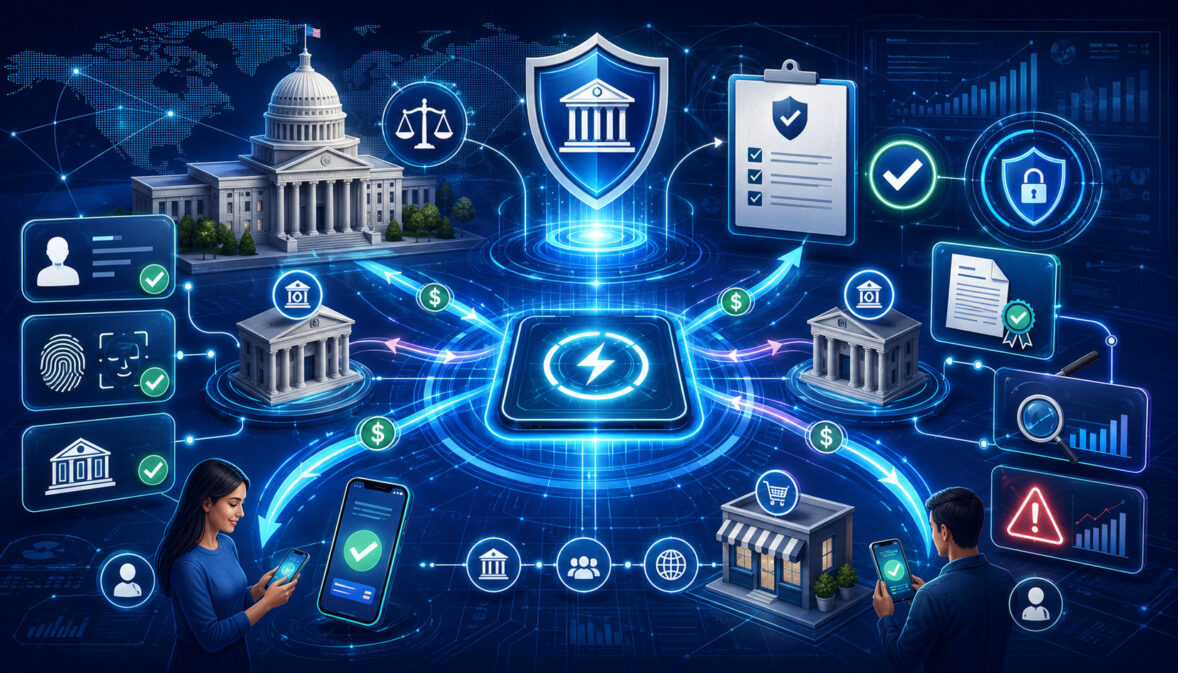
Government Regulations Affecting Instant Payments
Instant payments are changing how money moves between consumers, businesses, banks, payroll teams, merchants, digital platforms, and financial service providers. The topic of government regulations affecting instant payments matters because faster money movement also means faster risk movement.
When funds can move with near-immediate confirmation and availability, organizations need stronger controls around fraud, authorization, customer verification, cybersecurity, recordkeeping, and dispute handling.
Instant payments can help businesses improve cash flow, pay vendors faster, issue quicker refunds, support payroll needs, and reduce delays that come with slower bank transfers. But speed does not remove compliance responsibility. In many cases, speed raises the importance of payment screening, identity checks, fraud monitoring, audit trails, and operational readiness.
This article is informational only and does not provide legal, tax, financial, or compliance advice. Businesses, financial institutions, and payment teams should work with qualified professionals when applying specific rules to their operations.
What Instant Payments Are
Instant payments are digital payments that allow money to move between accounts quickly, often with immediate confirmation and near-immediate availability to the receiver.
They are commonly used for account-to-account payments, business disbursements, customer refunds, payroll-related payments, vendor payments, insurance payouts, marketplace payouts, and other time-sensitive transfers.
Instant payments are different from many traditional bank transfers because they are designed for speed and availability outside normal business-hour expectations. Some real-time payment systems support clearing, settlement, confirmation, and funds availability in a much shorter window than standard ACH or check-based processes.
FedNow, for example, provides interbank clearing and settlement that allows funds to move between sender and receiver accounts in near real time and at any time of day.
This speed can be helpful, but it changes the risk model. A delayed payment may leave more time to identify mistakes, cancel instructions, review suspicious activity, or correct account details. An instant payment may not provide the same margin for manual review after the payment is initiated.
That is why instant payment rules often focus on payment authorization, secure access, fraud screening, customer communication, transaction monitoring, and operational controls. Businesses should not treat instant payments as simply “faster ACH.” They are a different payment experience with different risk management needs.
For readers comparing faster bank-transfer options, this guide on instant payment networks and payment rails can help explain how different systems support real-time payments, account-to-account payments, and faster settlement.
Why Regulations Matter for Instant Payments
Instant payment regulations matter because payment speed can amplify both benefits and harm. When a legitimate payment is sent correctly, instant processing can improve cash flow, reduce uncertainty, and create a better user experience. When a fraudulent, mistaken, or unauthorized payment is sent, the same speed can make recovery more difficult.
Government rules for instant payments help support trust in the payment system. They influence how financial institutions verify customers, monitor transactions, resolve certain consumer errors, screen for sanctions concerns, report suspicious activity, protect sensitive information, and manage operational risk.
These rules do not exist only for banks. They also shape the expectations placed on payment processors, fintech platforms, merchants, payroll teams, and businesses that send or receive fast bank transfers.
Regulation also helps create consistency. Without strong payment regulations, businesses and consumers may not understand their rights, responsibilities, or risks.
Financial institutions may use different standards for authentication, fraud response, customer notices, screening, and record retention. A regulated payment environment supports safer adoption by making risk controls part of the infrastructure rather than an afterthought.
Because speed increases the need for stronger protection, businesses may also benefit from reviewing instant payment security and compliance topics before adding real-time payments to daily operations.
However, regulation can also create complexity. Businesses using real-time payment systems must understand that speed does not remove the need for careful vendor setup, approval workflows, customer notices, reconciliation, refund procedures, and internal training.
Instant payments compliance is not only about following a rule after something goes wrong. It is about building a process that reduces the chance of error, fraud, or misuse before the payment leaves the account.
Key Government Regulations Affecting Instant Payments
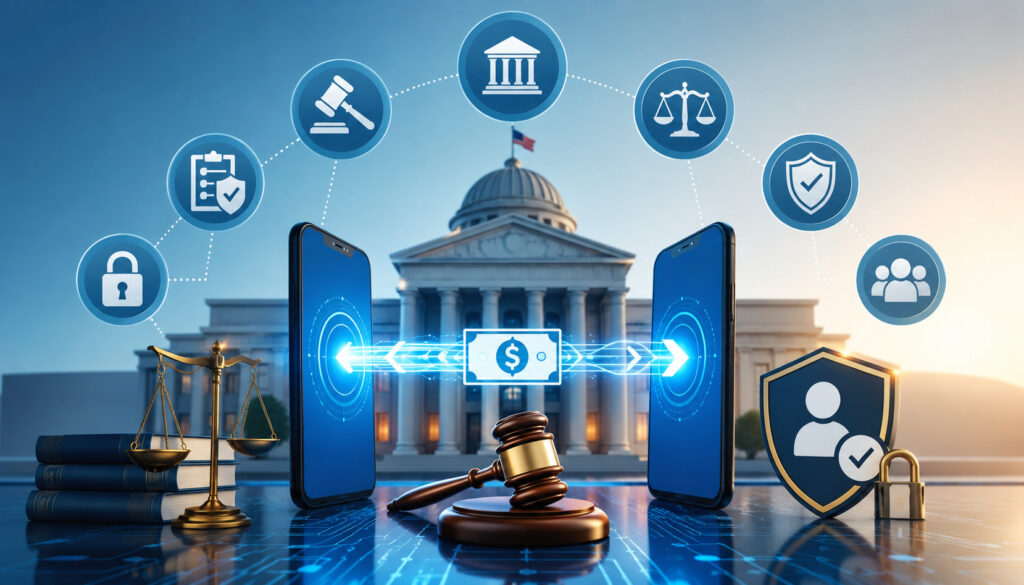
Government regulations affecting instant payments come from several overlapping areas rather than one single law. Real-time payments compliance may involve consumer protection rules, anti-money laundering laws, sanctions restrictions, bank supervision, cybersecurity guidance, privacy expectations, and payment network operating rules.
For consumers, electronic fund transfer rules may affect unauthorized transfers, disclosures, error resolution, account access, and documentation.
Regulation E protects consumers when they use electronic fund transfers, and its error resolution section defines several types of errors, including unauthorized electronic fund transfers and incorrect electronic fund transfers.
For financial crime prevention, AML requirements influence how financial institutions identify customers, monitor account activity, report suspicious activity, and maintain records. The Bank Secrecy Act authorizes reporting and other requirements to help detect and prevent money laundering.
For sanctions compliance, payment participants must consider restrictions administered by the sanctions authority responsible for economic and trade sanctions. That authority administers and enforces sanctions programs connected to national security and foreign policy goals.
For cybersecurity, banking supervisors and interagency guidance focus on authentication, access controls, cyber risk awareness, third-party risk, and resilience. FFIEC resources emphasize the need for financial institutions and critical third-party service providers to identify, assess, and mitigate cybersecurity risks.
Consumer Protection Rules
Consumer-facing payment teams should understand how electronic fund transfer rules may affect unauthorized transfers, error resolution, disclosures, and customer communication.
Consumer protection rules affect instant payments because many fast bank transfers are electronic fund transfers. These rules may cover unauthorized transfers, incorrect transfers, disclosures, error resolution procedures, account statements, and customer communication.
For consumers, this can mean they have processes available when certain payment errors or unauthorized activity occur.
For businesses, consumer protection rules are important even when the business itself is not the financial institution. A merchant, payroll team, or platform may still need to support documentation, customer service, refund handling, and accurate payment records.
If a customer reports that a payment was unauthorized or incorrect, poor records can slow the investigation and create confusion.
Consumer protection rules also matter because instant payment speed can create false expectations. A customer may assume a mistaken payment can be pulled back like a card authorization.
A business may assume a customer dispute works the same way across all payment rails. In reality, payment type, account type, authorization, timing, and applicable rules all matter.
Anti-Money Laundering Requirements
Anti-money laundering requirements help financial institutions detect and prevent misuse of payment systems. Faster payments can be attractive to criminals because funds may move quickly through multiple accounts.
Financial institutions often build AML programs around official Bank Secrecy Act guidance, which supports suspicious activity detection, reporting, customer due diligence, and recordkeeping.
AML controls help identify suspicious behavior, unusual payment patterns, high-risk activity, and transactions that do not match expected customer behavior.
AML programs often involve customer identification, risk assessment, transaction monitoring, suspicious activity reporting, recordkeeping, and ongoing review. The Bank Secrecy Act framework is central to these requirements, and supervisory resources describe BSA and AML obligations for banking organizations.
For businesses, AML obligations may be indirect but still practical. A bank or payment provider may request information about business ownership, expected transaction volume, industry type, payout behavior, or customer base. These questions are not just onboarding formalities. They help institutions assess risk and monitor activity against expected patterns.
Sanctions Screening
Sanctions screening is important because payment systems should not be used to move funds for restricted parties, blocked entities, or prohibited activity. In slower payment environments, manual review may be easier to insert into the workflow. In instant payments, screening must often happen quickly and accurately before or during payment processing.
Sanctions screening can involve customer screening, account screening, transaction screening, and review of names, locations, counterparties, and other payment details. Automated screening tools may produce false positives, so organizations need review workflows that can handle alerts without creating unnecessary delays or missed risks.
The challenge is balance. Instant payments are valuable because they move fast, but compliance teams cannot ignore sanctions risk. Strong screening controls, escalation paths, and documented decisions help businesses and financial institutions manage speed without abandoning oversight.
Cybersecurity and Data Protection
Instant payment systems depend on secure digital infrastructure. If criminals compromise login credentials, administrator access, payment APIs, vendor files, or approval workflows, they may be able to move funds quickly before the organization detects the issue. Cybersecurity is therefore central to instant payment compliance requirements.
Important controls include secure login, multi-factor authentication, encryption, access management, system monitoring, vendor risk management, secure APIs, incident response planning, and employee training.
Authentication and access guidance from banking supervisors highlights risk management principles for employees, third parties, systems, and customers accessing digital banking services.
Data protection also matters. Payment records may include account details, personal information, transaction history, payroll information, invoices, and customer identifiers. Businesses should limit access, store information securely, and avoid collecting more payment data than they need.
Operational Risk Management
Operational risk management covers the systems, people, processes, and controls needed to keep payments running safely. Instant payments require high availability, clear procedures, reliable settlement processes, strong liquidity management, and business continuity planning.
If a payment system goes down, payroll files fail, duplicate payments are sent, vendor details are changed incorrectly, or fraud alerts are ignored, the impact can be immediate. Businesses using real-time payments should plan for outages, exception handling, failed confirmations, suspicious payment activity, reconciliation breaks, and customer support escalations.
Operational risk management also includes training. Employees should understand which payment methods are final, which require additional review, which limits apply, and who has authority to approve payments. Instant payment risk management works best when it is built into daily operations rather than saved for emergencies.
Instant Payment Regulation Overview Table
The table below summarizes major regulatory and compliance areas that affect instant payments. It is not a legal checklist, but it can help businesses and payment teams understand the main themes behind instant payment regulations.
| Regulatory Area | What It Covers | Why It Matters | Who Is Affected | Practical Business Impact |
| Consumer protection | Unauthorized transfers, errors, disclosures, account access, customer rights | Helps protect consumers when covered electronic payment issues occur | Financial institutions, consumers, customer-facing businesses | Requires clear records, customer communication, and support procedures |
| AML | Customer due diligence, transaction monitoring, suspicious activity reporting | Helps detect money laundering and illicit finance | Banks, covered financial institutions, payment providers | May require customer verification, risk scoring, and activity review |
| KYC | Identity verification and customer information | Helps confirm who is using payment services | Banks, payment providers, platforms | Businesses may need to provide ownership and transaction details |
| Sanctions screening | Restricted parties, blocked entities, prohibited transactions | Prevents payments involving sanctioned parties or restricted activity | Financial institutions, payment intermediaries, certain businesses | Requires screening tools, escalation workflows, and documentation |
| Fraud prevention | Account takeover, scams, fake invoices, mule accounts | Reduces losses from fast, difficult-to-recover payments | Businesses, banks, merchants, payroll teams | Requires verification, limits, alerts, and approval controls |
| Cybersecurity | Authentication, access controls, monitoring, incident response | Protects payment systems from compromise | Banks, processors, vendors, businesses | Requires secure login, employee training, and vendor review |
| Data privacy | Handling, storage, sharing, and retention of payment data | Protects sensitive payment and identity information | Businesses, service providers, financial institutions | Requires data minimization, access limits, and secure storage |
| Recordkeeping | Payment records, approvals, disputes, refunds, audit trails | Supports investigations, accounting, and compliance reviews | Businesses and financial institutions | Requires organized documentation and reconciliation |
| Settlement finality | When payment obligations become final | Reduces uncertainty but increases need for pre-payment controls | Senders, receivers, banks, payment networks | Requires verification before sending funds |
| Operational resilience | Continuity, outages, liquidity, exception handling | Keeps payment systems safe and reliable | Financial institutions, processors, payment users | Requires backup procedures, monitoring, and incident plans |
Real-Time Payment Regulations and Settlement Finality
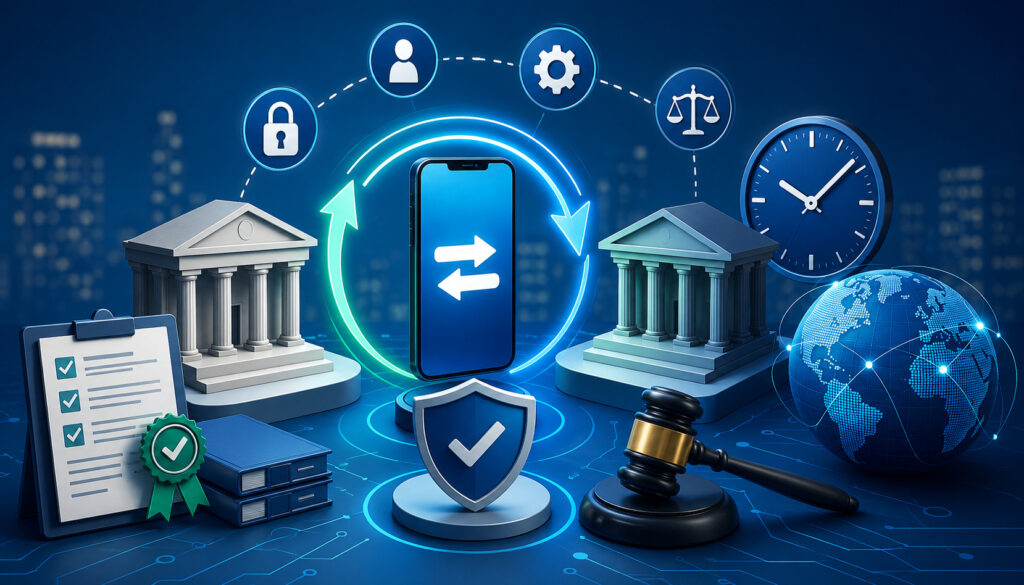
Settlement finality is one of the most important issues in real-time payment regulations. Finality means that once a payment is accepted and settled, it may be difficult or impossible to cancel, amend, or pull back through the same process. This creates certainty for the receiver, but it also places more responsibility on the sender.
FedNow rules operate within a legal framework for funds transfers through the service, and Regulation J includes a subpart for funds transfers through that instant payment service. The rules allow operating circulars to address security procedures, payment order formats, acceptance, execution, settlement, and other service terms.
Real-time payment systems are designed to give the receiver confidence that funds are available quickly. That is valuable for payroll, emergency disbursements, supplier payments, refunds, and account-to-account payments. But finality also means the sender must verify details before submitting the payment.
Why Finality Matters
Finality matters because it changes how businesses should think about risk. In a delayed payment environment, there may be time to catch an error after submission. With instant payments, a wrong account number, fake invoice, compromised vendor file, or social engineering scam may result in funds leaving quickly.
Finality can reduce uncertainty for the receiver. A supplier may ship goods sooner, a contractor may continue work, or a customer may regain access to funds faster because payment confirmation is immediate. That certainty is one of the main business benefits of faster payments.
However, finality increases the need for front-end controls. Businesses should verify recipient identity, confirm account details through trusted channels, use approval workflows, set payment limits, and train employees to spot urgent payment scams.
Reversals, Refunds, and Disputes
A reversal is not the same as a refund, and a refund is not the same as a dispute. A reversal usually means undoing the original payment through the payment rail. A refund usually means sending a separate payment back to the customer or payer. A dispute or error claim may require review under applicable rules, documentation, investigation, or customer support procedures.
For instant payments, businesses should avoid promising that every mistaken payment can be reversed. In many cases, the proper approach may involve contacting the financial institution, documenting the issue, communicating with the recipient, and following the relevant dispute or error process.
Refund procedures should be written before instant payments are launched. Customer-facing teams should know how refunds are issued, how long they may take, what confirmation customers receive, and which records must be kept.
Consumer Protection and Instant Payments
Consumer protection rules may apply to certain electronic payments, including unauthorized transfers and errors. Regulation E protects consumers when they use electronic fund transfers, and official rules describe procedures for resolving errors.
For businesses, consumer protection affects operations in several ways. Customer service teams may receive questions about payment timing, duplicate payments, incorrect recipient details, unauthorized activity, or refund delays. Finance teams may need to provide documentation, receipts, confirmation numbers, approval records, and communication history.
Consumer protection also affects trust. If customers do not understand how instant payments work, they may become frustrated when a payment cannot be canceled like a card transaction or when a refund must be handled separately. Good communication reduces confusion and supports a better experience.
Unauthorized Transfers
Unauthorized transfers can create serious issues for consumers, financial institutions, and businesses connected to the payment flow. If a consumer claims a payment was not authorized, the institution may need to follow applicable investigation and error resolution procedures.
Businesses should monitor accounts closely and encourage customers to do the same. Quick detection matters because fast payments may move funds before a victim realizes what happened. Customer-facing teams should know how to direct users to their financial institution when appropriate and how to preserve relevant records.
Unauthorized transfer risk also reinforces the value of authentication. Strong login controls, device monitoring, alerts, and transaction limits can reduce the chance that an account takeover results in fast payment loss.
Error Resolution
Payment errors may involve incorrect amounts, wrong recipients, duplicate payments, omitted transactions, or unauthorized activity. Error resolution requires documentation. A business that cannot produce receipts, confirmations, invoice records, customer notices, or approval history may struggle to support an investigation.
Regulation E identifies several error categories for covered consumer electronic fund transfers, including unauthorized transfers, incorrect transfers, omitted transfers, and certain requests for documentation or clarification.
Businesses should keep payment records organized by transaction date, amount, payer, receiver, invoice number, confirmation number, refund status, and internal approval. This helps accounting, customer support, and compliance teams respond faster.
Clear Customer Communication
Customers should understand payment timing, confirmation, refund policies, and transaction details before they send or receive instant payments. Good communication reduces confusion and helps prevent avoidable disputes.
Businesses can improve communication by showing the recipient name, amount, payment purpose, confirmation status, and refund process clearly. For large payments, businesses may also use confirmation screens or additional verification steps before payment submission.
Customer communication should avoid overpromising. Instead of saying every mistake can be undone, explain that instant payments may process quickly and that customers should review details carefully before authorizing a payment.
AML, KYC, and Instant Payments Compliance
AML and KYC requirements affect instant payments because fast movement of funds can be misused for money laundering, fraud proceeds, mule account activity, and layered transfers. Financial institutions must understand who their customers are and whether payment activity makes sense for the customer profile.
The Bank Secrecy Act authorizes requirements that help detect and prevent money laundering, and banking agencies provide supervisory resources for BSA and AML compliance.
Instant payments compliance may involve customer identification, beneficial ownership information, transaction monitoring, suspicious activity detection, risk scoring, recordkeeping, and ongoing customer due diligence. For businesses, this may show up during onboarding, account reviews, unusual activity inquiries, or payment limit decisions.
Customer Verification
Customer verification helps banks and payment providers understand who is using payment services. A business may need to provide legal name, ownership details, tax identification information, address, industry, expected transaction volume, and information about payment use cases.
This is especially important for instant payment risk management. If a business claims it will send low-value vendor payments but suddenly begins sending high-volume transfers to unrelated accounts, monitoring systems may flag that activity.
Customer verification is not only a startup step. It may continue through account reviews, updates to beneficial ownership information, changes in payment patterns, and periodic requests for updated documentation.
Transaction Monitoring
Transaction monitoring helps identify unusual activity. Examples include rapid transfers to new recipients, unusually large payments, repeated payments just below internal limits, high-risk destinations, payments inconsistent with normal business behavior, or sudden changes in account access.
In real-time payments compliance, monitoring must happen quickly. A delayed alert may not prevent a payment from leaving, but it can help detect patterns, freeze additional activity, escalate suspected fraud, or support suspicious activity review.
Businesses can support monitoring by using clear payment descriptions, invoice references, vendor records, and approval notes. Clean data helps systems and reviewers understand whether a payment fits normal activity.
Recordkeeping and Audit Trails
Recordkeeping is essential for instant payments compliance. Payment records support accounting, reconciliation, dispute response, fraud investigations, AML review, sanctions screening, and internal audits.
A good audit trail should show who created the payment, who approved it, what invoice or obligation it relates to, what account details were used, when the payment was submitted, when confirmation was received, and whether any exception occurred.
Businesses should also keep records of vendor bank changes, customer refund requests, payroll approvals, fraud alerts, and internal communication. If a payment is questioned later, the audit trail may be the most important evidence available.
Sanctions Screening and Instant Payments
Sanctions screening can be challenging when payments move quickly. A payment team may have only a short window to identify whether a customer, vendor, recipient, or transaction raises sanctions concerns. That is why automated screening, strong data quality, and escalation procedures are important.
The sanctions authority responsible for these programs administers and enforces economic and trade sanctions against targeted countries, regimes, individuals, groups, entities, and other threats. Its compliance framework encourages organizations to use a risk-based approach, management commitment, internal controls, testing, auditing, and training.
For businesses, sanctions risk may arise through vendors, international counterparties, platform users, customers, beneficial owners, or payment destinations. Even if a business does not perform screening directly, its financial institution or payment provider may request additional information when an alert occurs.
Why Speed Creates Screening Challenges
Instant processing reduces the time available for manual review. In a batch environment, payment files may be screened before release, and exceptions may be reviewed before settlement. With instant payments, screening often needs to occur in real time or near real time.
This creates pressure on data quality. If a recipient name is incomplete, abbreviated, misspelled, or inconsistent across systems, screening may generate more false positives or miss important matches. Payment data should be structured and accurate wherever possible.
Speed also affects escalation. Compliance teams need clear rules for when to hold, reject, investigate, or escalate a payment. Without predefined workflows, teams may be forced to make rushed decisions during high-risk events.
Screening Controls
Screening controls may include automated name screening, customer risk scoring, payment message screening, account-level restrictions, velocity rules, manual review queues, and escalation procedures. The right approach depends on the type of organization, payment volume, customer base, and risk profile.
Businesses can strengthen screening support by maintaining clean vendor records, verifying ownership information, reviewing high-risk payees, and avoiding vague payment descriptions. For higher-risk payments, additional review before release may be appropriate.
Screening controls should be tested. An organization should know whether alerts are being generated, reviewed, documented, and resolved. A screening tool is not enough if nobody owns the workflow.
Fraud Prevention Rules and Risk Controls
Payment fraud prevention is one of the most important practical issues in instant payment compliance. Fraud can happen through account takeover, phishing, social engineering, fake invoices, business email compromise, mule accounts, scams, and manipulated payment instructions.
Instant payments can be attractive to fraudsters because funds may move quickly and may not be easy to recover. That does not mean businesses should avoid instant payments. It means they should use strong controls before payments are sent.
Fraud prevention is both a compliance issue and an operational issue. It involves training employees, verifying instructions, using secure systems, limiting user permissions, monitoring transactions, reviewing exceptions, and documenting suspicious activity.
Account Takeover Fraud
Account takeover fraud occurs when criminals gain access to a legitimate account and use it to send payments, change account details, view sensitive information, or approve transfers. This may happen through stolen passwords, phishing, malware, SIM swapping, compromised email, or weak authentication.
Instant payments increase the urgency of account takeover prevention. Once an attacker enters the system, they may attempt to send funds quickly, change vendor instructions, or create new payees before detection.
Businesses should use multi-factor authentication, device alerts, role-based access, login monitoring, strong password practices, and immediate deactivation for former employees. Payment approval rights should be limited to trusted users with a real business need.
Business Email Compromise
Business email compromise occurs when a fraudster uses email deception to trick a business into sending money to a fraudulent account. The fraudster may impersonate an executive, vendor, landlord, supplier, employee, or customer. They may send a fake invoice, alter wiring instructions, or create urgency around a supposed emergency payment.
Instant payments can make business email compromise more damaging because the payment may settle before the fraud is discovered. A finance employee who is rushed into bypassing normal approval controls may unknowingly send funds to a criminal account.
Businesses should verify payment instruction changes using a trusted phone number or secure portal, not the contact details provided in a suspicious email. They should also require dual approval for new vendors, changed bank details, and large payments.
Real-Time Fraud Monitoring
Real-time fraud monitoring helps detect suspicious activity as it happens. Controls may include transaction limits, velocity checks, device fingerprinting, behavioral analytics, payee risk scoring, anomaly detection, alerts, and temporary holds for high-risk transactions.
For businesses, fraud monitoring should be paired with human procedures. Someone must review alerts, contact users, pause suspicious activity, and document the outcome. Alerts that are ignored do not reduce risk.
Fraud monitoring should also be adjusted over time. As payment volume, vendors, payroll needs, or customer payment behavior changes, risk rules may need to be updated.
Instant Payment Risk Control Table
| Risk | How It Appears | Regulatory Concern | Prevention Control | Business Best Practice |
| Account takeover | Unusual login, new payee, urgent payment | Unauthorized access, fraud loss, weak security | Multi-factor authentication, login alerts, device monitoring | Review access rights and remove inactive users |
| Fake invoices | Fraudulent invoice sent by email | Fraud, poor authorization controls | Vendor verification, invoice matching, approval workflow | Confirm new or changed payment instructions by trusted channel |
| Mule accounts | Payments routed through accounts used by criminals | AML and suspicious activity concerns | Transaction monitoring, risk scoring, unusual pattern alerts | Review unusual vendor or customer activity |
| Payment mistakes | Wrong amount, wrong recipient, duplicate payment | Error handling and recordkeeping | Confirmation screens, approval checks, payment limits | Verify details before sending |
| Suspicious transfers | High-volume or unusual transfers | AML, fraud, sanctions risk | Monitoring, escalation, hold procedures | Document review decisions |
| Sanctions risk | Match to restricted party or high-risk counterparty | Sanctions compliance | Customer and transaction screening | Keep vendor data accurate |
| Data breach | Payment records or credentials exposed | Cybersecurity and privacy risk | Encryption, access controls, incident response | Limit access to sensitive payment data |
| Operational outage | Payment platform unavailable or delayed | Resilience and customer impact | Business continuity plan, backup procedures | Create manual escalation and customer notice procedures |
Cybersecurity Requirements for Instant Payments
Cybersecurity is critical because instant payment systems depend on digital access, APIs, online banking, payment dashboards, user permissions, customer data, and vendor integrations. If these systems are compromised, funds and data may be exposed quickly.
Financial institutions and payment service providers are expected to manage cyber risk through layered controls. FFIEC cybersecurity resources emphasize cyber awareness and the need to identify, assess, and mitigate cybersecurity risks for financial institutions and critical third-party service providers.
Businesses using instant payments should focus on secure login, multi-factor authentication, encryption, tokenization where appropriate, role-based access, vendor risk management, monitoring, incident response, and staff training.
Cybersecurity is not only an IT function. It affects finance, payroll, customer support, vendor management, and executive approval processes.
Access Controls
Access controls determine who can view payment data, create payments, edit vendor records, approve transfers, issue refunds, and change system settings. Weak access controls are a common source of payment risk.
Only authorized employees should have payment system access. Permissions should be based on job role, not convenience. An employee who enters invoices may not need approval authority. A customer service employee who views refund status may not need access to bank account details.
Businesses should review permissions regularly, especially after role changes, employee departures, system upgrades, and vendor changes. Shared logins should be avoided because they make audit trails unreliable.
Authentication
Authentication helps confirm that users are who they claim to be. Strong authentication can reduce account takeover risk, unauthorized payment release, and fraudulent access to sensitive payment information.
Multi-factor authentication is especially important for payment administrators, approvers, payroll users, vendor management users, and employees with access to account details. Authentication should be paired with device monitoring, suspicious login alerts, and secure password practices.
Businesses should also train employees to recognize phishing attempts. A strong authentication tool can be undermined if an employee approves a fraudulent login request or shares credentials through a fake portal.
Incident Response
Incident response is the plan an organization follows when something goes wrong. For instant payments, incidents may include suspected fraud, account compromise, data exposure, duplicate payments, incorrect payments, vendor file manipulation, or system outages.
An incident response plan should identify who must be notified, which accounts may need to be locked, which financial institution contacts should be used, how evidence should be preserved, and how customers or vendors should be informed.
Fast response matters. The earlier a business detects and reports a suspicious payment, the better its chances of limiting additional harm. Even if funds cannot be recovered, documentation can support investigations and future control improvements.
Data Privacy and Payment Information
Instant payments generate and rely on sensitive payment information. This may include account details, customer names, vendor records, payroll identifiers, invoice data, refund history, transaction confirmations, and communication records. Data privacy means handling this information responsibly throughout its lifecycle.
Businesses should collect only the payment data they need, store it securely, limit access, and retain it according to documented policy. Payment data should not be casually exported, shared in email, stored in unsecured spreadsheets, or kept indefinitely without a business reason.
Vendor handling is also important. Many businesses rely on payment processors, accounting tools, payroll platforms, fraud tools, and banking portals. Before sharing payment information with a vendor, businesses should understand how the vendor protects data, limits access, manages incidents, and supports audit needs.
Data privacy also supports fraud prevention. The less unnecessary payment data an organization stores, the less data criminals can steal or misuse.
Government Oversight of Payment Systems
Government oversight of payment systems supports safety, reliability, consumer protection, financial crime prevention, and confidence in banking infrastructure. Oversight can come through laws, regulations, supervisory guidance, examination expectations, enforcement actions, and official operating rules for certain payment services.
Payment systems involve many parties: financial institutions, processors, payment networks, technology vendors, businesses, consumers, and regulators. A weakness in one part of the system can affect others.
That is why oversight often focuses on risk management, operational resilience, cybersecurity, liquidity, customer protection, and compliance governance.
Official payment service rules also matter. For example, FedNow is governed by a legal and operating framework for participating institutions, and the operating circular is binding for parties using the service. These rules work alongside broader banking regulations and financial regulations.
Bank Supervision
Bank supervision helps ensure that financial institutions manage risk, follow applicable rules, maintain adequate controls, oversee vendors, protect customers, and respond to suspicious or unsafe activity. Supervisors may review AML programs, cybersecurity controls, operational resilience, third-party relationships, consumer compliance, and payment system governance.
For businesses, bank supervision may be felt through onboarding questions, payment limits, fraud reviews, account monitoring, documentation requests, and service availability. These controls may seem burdensome, but they help banks manage risk across the payment system.
A business that understands supervision-driven requirements can prepare better. Clean records, clear ownership information, documented payment policies, and consistent transaction behavior can reduce delays and confusion.
Payment Network Rules
Payment network rules may create requirements beyond government regulations. These rules can define participant eligibility, message formats, transaction limits, fraud procedures, settlement processes, risk controls, operating hours, returns, disputes, and technical standards.
For businesses, this means the payment rail matters. A payment sent through ACH, Same Day ACH, wire transfer, FedNow, or RTP may follow different rules, timeframes, finality expectations, and dispute processes.
Businesses should ask their financial institution or payment provider how the relevant payment network rules affect sending, receiving, refunds, limits, confirmations, and exception handling.
FedNow, RTP, ACH, and Wire Transfers: Regulatory Differences
Different payment rails move money differently. Instant payments, RTP, FedNow, Same Day ACH, standard ACH, and wire transfers all support bank transfers, but they differ in speed, finality, use cases, costs, operating rules, and compliance considerations.
FedNow supports instant interbank clearing and settlement through participating depository institutions. RTP is a real-time payment network that provides instant payments through participating financial institutions and supports immediate funds availability.
ACH is a batch-based network commonly used for payroll, bill payments, subscriptions, vendor payments, and account-to-account transfers. Same Day ACH is faster than standard ACH but is still not the same as a true instant payment.
Wire transfers are often used for high-value or urgent payments. They can be fast and final, but they usually involve different procedures, costs, and review expectations than retail or business instant payments.
Businesses evaluating instant rails can review this FedNow integration guide to better understand how instant payment adoption may affect operations, security, and payment workflows.
Payment Rail Comparison Table
| Payment Rail | Typical Speed | Finality Considerations | Common Use Cases | Compliance Considerations | Business Review Points |
| Instant payments | Near real time through participating institutions | Often difficult to cancel after acceptance | Vendor payments, refunds, payroll-related payments, account-to-account transfers | Fraud monitoring, authorization, screening, records | Verify recipient and approval before release |
| RTP | Real-time payment network with immediate availability | Designed for fast confirmation and finality | B2B payments, disbursements, bill payments, treasury use | Network rules, fraud controls, AML, sanctions screening | Confirm bank participation and limits |
| FedNow | Instant interbank clearing and settlement through participating institutions | Governed by official service rules and operating procedures | Business payments, consumer payments, disbursements | Regulation J framework, operating circulars, bank controls | Confirm account eligibility and send/receive capability |
| Same Day ACH | Same business-day ACH processing | More structured return process than instant rails | Payroll adjustments, vendor payments, bill payments | ACH authorization, return handling, Nacha rules | Understand cutoffs and return risk |
| Standard ACH | Batch processing, often slower | Return rules and processing windows apply | Payroll, recurring billing, subscriptions, B2B payments | Authorization, returns, consumer protections, records | Good for non-urgent recurring payments |
| Wire transfers | Often same day, commonly used for larger payments | Frequently treated as final once executed | Large vendor payments, real estate, treasury transfers | Bank procedures, sanctions screening, fraud controls | Use strict verification and dual approval |
Instant Payments Compliance for Businesses
Instant payments compliance for businesses starts with internal controls. Even when the bank or payment provider handles regulated infrastructure, businesses remain responsible for how they authorize payments, verify recipients, manage employee access, store records, communicate with customers, and reconcile transactions.
A business should begin by deciding which payments are appropriate for instant rails. Payroll exceptions, customer refunds, emergency vendor payments, contractor payouts, and time-sensitive supplier payments may be good candidates. Routine, low-urgency, high-volume payments may still fit ACH or other methods.
The business should also document who can use instant payments, what limits apply, which approvals are required, how new recipients are verified, how refunds are handled, and how exceptions are escalated. Strong internal policies reduce mistakes and support faster decision-making.
Verify Payment Details Before Sending
Payment details should be verified before an instant payment is released. This includes recipient name, account details, invoice number, payment amount, payment purpose, and authorization source.
Businesses should be especially careful when vendor bank details change. A criminal may compromise email and send new payment instructions that appear legitimate. Payment changes should be verified through a trusted phone number, secure vendor portal, or known contact method.
For large or unusual payments, add an extra review step. A few minutes of verification can prevent a loss that is difficult to reverse.
Use Approval Workflows
Approval workflows help reduce mistakes, insider abuse, and social engineering fraud. They can include role-based permissions, payment limits, dual approval, segregation of duties, and exception review for new vendors or large transfers.
A strong workflow separates payment creation from payment approval. The same person should not always be able to add a vendor, change bank details, create an invoice, approve the payment, and reconcile the transaction without oversight.
Approval workflows should be documented and tested. If employees bypass controls during urgent situations, the policy needs reinforcement.
Keep Clear Payment Records
Clear payment records support accounting, tax documentation, audit trails, dispute response, fraud investigations, customer service, and compliance reviews. Instant payments should be recorded with the same discipline as wires, ACH, card transactions, and payroll payments.
Useful records include invoices, approvals, confirmation numbers, customer communications, refund notes, payment purpose, recipient details, timestamps, and reconciliation status.
A business should also document exceptions. If a payment was delayed, held, reviewed, refunded, disputed, or flagged, the reason and outcome should be recorded.
Instant Payments for Payroll and Vendor Payments
Payroll and vendor payments are two areas where instant payments can create real value. Employees, contractors, suppliers, and gig workers often care deeply about payment timing. Faster payments can improve satisfaction, reduce cash flow friction, and support urgent disbursements.
However, payroll and vendor payments also carry compliance and operational risk. Payroll requires accurate worker records, authorization, timing controls, wage documentation, and reconciliation. Vendor payments require invoice validation, account verification, approval authority, and fraud prevention.
Fast payouts should not mean loose controls. The faster the payment, the more important it is to verify identity, payment purpose, and approval before release.
Payroll Payments
Payroll payments require accuracy. A wrong amount, wrong account, duplicate payment, or unauthorized payroll change can create financial and employee trust issues. Instant payroll-related payments should be used carefully, especially for off-cycle payments, final pay, bonuses, corrections, or contractor disbursements.
Payroll teams should confirm employee identity, account ownership, payment amount, and approval authority. They should also document the payment reason and reconcile the transaction against payroll records.
Clear communication matters. Workers should understand when funds will be sent, what confirmation they will receive, and whom to contact if something looks wrong.
Vendor Payments
Vendor payments are a common target for fraud. Fake invoices, altered payment instructions, compromised vendor emails, and urgent payment requests can lead to losses. Instant vendor payments require strong verification.
Businesses should confirm vendor banking details before first payment and whenever instructions change. High-value payments should require dual approval. New vendors should go through onboarding and risk review before receiving instant payments.
Payment limits can also help. A business may decide that certain vendors, amounts, or categories require extra review before instant release.
Gig and Contractor Payments
Gig and contractor payments often benefit from speed. Contractors may expect fast payouts after completing work, and platforms may use instant payments to improve user experience.
Fast payouts still require identity checks, account verification, payment authorization, and transaction records. Businesses should confirm that contractor profiles are accurate and that payment activity matches expected work.
For marketplaces or platforms, monitoring is especially important. Rapid payouts to new accounts, repeated changes in payout details, or unusual transaction patterns may indicate fraud or account misuse.
Instant Payments for Merchants and Customer Payments
Merchants may use instant payments to accept customer payments, issue refunds, receive deposits, or manage account-to-account transfers. The appeal is clear: faster confirmation, quicker funds availability, and potentially smoother reconciliation.
However, merchants should prepare for customer expectations. A customer may expect instant refunds if the original payment was instant. A merchant may need processes for disputes, duplicate payments, incorrect amounts, and mistaken transfers.
Fraud screening is also important. Customer payments may involve account takeover, stolen credentials, scams, or suspicious payment patterns. Merchants should use payment confirmation, transaction monitoring, customer verification where appropriate, and clear refund policies.
Reconciliation is another practical issue. Instant deposits can improve cash visibility, but accounting systems must be ready to match payments with invoices, receipts, orders, refunds, and customer records.
Instant Payments and Cross-Channel Payment Strategy
Instant payments should fit into a broader payment strategy. They do not replace every payment method. Businesses may still need card payments, ACH, Same Day ACH, digital wallets, checks, wire transfers, invoices, and payment gateways.
Each method has strengths. Cards may be useful for customer-facing purchases. ACH may be cost-effective for recurring billing or payroll. Wires may remain common for certain high-value transfers. Instant payments may be best for time-sensitive account-to-account transfers, urgent disbursements, customer refunds, and faster vendor payments.
The right choice depends on speed, cost, risk, customer expectation, settlement timing, reversibility, compliance responsibility, and operational readiness. Businesses should avoid using the fastest method by default. Instead, they should use the payment rail that best matches the transaction.
A cross-channel strategy also helps reduce risk. If one system is unavailable, the business may have another approved payment option. If one method is too risky for a particular transaction, another method may provide more control.
Common Compliance Mistakes With Instant Payments
One common mistake is treating instant payments like reversible payments. Businesses may assume they can cancel or amend a payment after sending it. That assumption can lead to poor verification and avoidable losses.
Another mistake is weak vendor verification. Fraudsters often exploit payment instruction changes. Businesses should never rely only on email instructions for new bank details or urgent payment requests.
Other common mistakes include:
- Using shared logins for payment systems.
- Allowing too many employees to approve transfers.
- Skipping dual approval for high-value payments.
- Ignoring fraud alerts.
- Failing to reconcile instant payments daily.
- Keeping poor refund records.
- Not training staff on scams.
- Failing to review payment limits.
- Not documenting customer disputes.
- Assuming one payment rail’s rules apply to another.
Instant Payments Compliance Checklist
| Checklist Item | Why It Matters | Practical Action |
| Customer verification | Reduces misuse and supports compliance | Collect and maintain accurate customer or user information |
| Vendor verification | Prevents fake invoice and payment redirection fraud | Confirm new or changed bank details through trusted channels |
| Payment approvals | Reduces errors and unauthorized payments | Use dual approval for large or unusual payments |
| Transaction limits | Limits exposure if fraud occurs | Set limits by user, role, vendor, and payment type |
| Fraud monitoring | Detects suspicious activity | Use alerts, velocity checks, and anomaly detection |
| Sanctions screening | Helps avoid prohibited transactions | Use automated screening and escalation workflows |
| AML review | Supports suspicious activity detection | Monitor activity inconsistent with expected behavior |
| Access controls | Prevents unauthorized system use | Use role-based permissions and remove inactive users |
| Cybersecurity | Protects payment systems and data | Require multi-factor authentication and secure devices |
| Refund process | Reduces customer confusion | Document refund timing, approval, and confirmation |
| Dispute process | Supports customer service and compliance | Preserve records and define escalation steps |
| Recordkeeping | Supports audits, investigations, and accounting | Store confirmations, invoices, approvals, and notes |
| Reconciliation | Detects errors quickly | Match instant payments to invoices and bank records |
| Staff training | Reduces social engineering risk | Train employees on scams, approvals, and verification |
How Regulations Affect Instant Payment Adoption
Regulations affect instant payment adoption by shaping the cost, complexity, and confidence surrounding faster payments. Financial institutions and businesses may need to invest in fraud tools, compliance staff, vendor due diligence, cybersecurity systems, training, and reconciliation workflows before launching instant payments at scale.
This can slow adoption, especially for smaller organizations. However, regulation also supports trust. Businesses are more likely to use instant payments when they believe the payment system is reliable, secure, monitored, and supported by clear rules.
Instant payment adoption is not only a technology decision. It is a governance decision. Organizations need policies, controls, documentation, system readiness, and customer communication before speed becomes a daily operating tool.
Benefits of Strong Regulation
Strong regulation can support safer transactions, better fraud controls, reliable payment infrastructure, and clearer customer expectations. It can also help financial institutions manage risk consistently across payment channels.
Regulation also encourages investment in cybersecurity, AML controls, sanctions screening, consumer protection, and operational resilience. These controls make instant payments more trustworthy for businesses and consumers.
For businesses, strong regulation can create more confidence in adopting faster payments. When rules and expectations are clearer, decision-makers can plan controls instead of guessing.
Challenges for Businesses
Compliance requirements can create operational challenges. Businesses may need to train employees, update policies, review vendors, improve cybersecurity, maintain better records, and monitor payments more closely.
Smaller businesses may find the terminology difficult at first. Instant payment laws, banking regulations, payment regulations, financial regulations, and network rules can overlap. That is why businesses should start with practical controls: verify recipients, secure access, document approvals, monitor transactions, and reconcile quickly.
The goal is not to become a regulator. The goal is to use instant payments safely within a controlled business process.
Best Practices for Managing Instant Payment Compliance
Businesses can manage faster payment compliance by combining technology, policy, and training. The most effective controls are often simple but consistently followed.
Start by deciding which payments qualify for instant processing. Then define limits, approval steps, verification procedures, refund handling, and reconciliation responsibilities. Review user access regularly and require multi-factor authentication for payment systems.
Train employees to recognize account takeover attempts, fake invoices, business email compromise, urgent payment scams, and suspicious payment changes. Encourage employees to slow down when a payment request creates pressure.
Businesses should also review vendor controls. If a third-party platform handles payments, ask how it manages authentication, fraud monitoring, data protection, incident response, and recordkeeping.
Finally, stay informed through authoritative sources. Rules, supervisory expectations, and payment network practices can change. Regular review helps businesses keep policies current without overreacting to every headline.
Internal and External Resources for Further Reading
For more background on payment network selection, businesses can review educational guidance on comparing ACH, RTP, and FedNow through the payment networks resource section on Instant Payment Guide.
For security planning, the security and compliance section on Instant Payment Guide includes related topics such as authentication, tokenization, encryption, fraud prevention, and instant payment security.
For settlement and clearing context, the settlement and clearing resource section explains how payment settlement concepts support faster money movement and liquidity planning.
For small business use cases, the FedNow integration guide on Instant Payment Guide discusses practical examples such as payroll, supplier payments, customer refunds, and emergency disbursements.
For authoritative regulatory context, businesses can review Regulation E resources for electronic fund transfers and error resolution, BSA and AML resources for financial crime prevention, sanctions compliance guidance, FedNow operating rules, and cybersecurity resources from banking supervisory bodies.
FAQs
What are government regulations affecting instant payments?
Government regulations affecting instant payments are the laws, rules, supervisory expectations, and official operating frameworks that influence how fast bank transfers are offered, monitored, secured, and documented.
They may involve consumer protection, AML, KYC, sanctions screening, cybersecurity, fraud prevention, operational resilience, bank supervision, and payment recordkeeping.
There is not one single rule that covers every instant payment situation. Instead, different rules may apply depending on the payment rail, customer type, account type, financial institution, transaction purpose, and risk profile.
Why do instant payments need regulation?
Instant payments need regulation because speed can increase risk. When money moves quickly, fraud, scams, account takeover, mistaken payments, and restricted transactions can also move quickly.
Regulation helps create safer systems by requiring or encouraging controls around identity, authorization, monitoring, customer protection, and security.
Regulation also supports trust. Businesses and consumers are more likely to use real-time payments when they know that financial institutions and payment participants must follow risk management and security expectations.
What are instant payment regulations?
Instant payment regulations include consumer protection rules, financial crime rules, sanctions requirements, bank supervision standards, cybersecurity expectations, and payment network rules that affect instant payment activity.
These may include rules related to electronic fund transfers, AML, customer verification, suspicious activity monitoring, sanctions compliance, recordkeeping, and operational risk.
The exact requirements depend on the organization and payment activity. A bank may have direct regulatory obligations, while a business using instant payments may need strong internal controls and documentation to support safe use.
How do real-time payment regulations affect businesses?
Real-time payment regulations affect businesses by shaping how banks and payment providers onboard customers, set limits, review activity, respond to fraud, and request documentation. Businesses may need to verify vendor details, maintain accurate records, use approval workflows, secure system access, and support customer communication.
Even when a business is not directly regulated like a bank, it still needs responsible payment processes. Poor controls can lead to fraud losses, accounting problems, customer disputes, and operational disruption.
Are instant payments reversible?
Instant payments may be difficult or impossible to reverse once accepted and settled, depending on the payment rail, rules, circumstances, and financial institution procedures. A refund may need to be sent as a separate payment rather than reversing the original transaction.
Businesses should verify payment details before sending funds. They should also avoid telling customers or employees that every instant payment error can be undone.
What compliance rules apply to instant payments?
Compliance rules that may affect instant payments include consumer protection rules, AML requirements, KYC expectations, sanctions screening, fraud prevention controls, cybersecurity standards, data privacy practices, recordkeeping obligations, and payment network operating rules.
The practical controls include customer verification, transaction monitoring, payment authorization, access controls, audit trails, incident response, and reconciliation.
How do AML and KYC rules affect instant payments?
AML and KYC rules affect instant payments by requiring financial institutions to understand who is using payment services and whether activity appears consistent with legitimate use. This can involve customer identification, beneficial ownership information, risk scoring, transaction monitoring, suspicious activity detection, and recordkeeping.
Businesses may experience these requirements through onboarding questions, documentation requests, transaction reviews, and payment limits.
Why is fraud prevention important for real-time payments?
Fraud prevention is important because real-time payments can move funds before a victim or business detects the fraud. Account takeover, phishing, fake invoices, business email compromise, mule accounts, and social engineering can all exploit speed.
Strong fraud controls include multi-factor authentication, approval workflows, transaction limits, real-time alerts, employee training, and verification of new or changed payment instructions.
How do instant payment regulations affect payroll and vendor payments?
Instant payment regulations and compliance expectations affect payroll and vendor payments by requiring accurate records, authorization controls, identity verification, fraud prevention, and reconciliation. Payroll teams should confirm worker records and payment amounts. Vendor teams should verify invoices, account details, and approval authority.
Fast payment should not mean relaxed review. The faster the payment, the more important pre-payment verification becomes.
What should businesses do before using instant payments?
Before using instant payments, businesses should define approved use cases, set transaction limits, assign user permissions, create approval workflows, verify vendors, secure system access, train staff, document refund procedures, and establish reconciliation practices.
Businesses should also ask their financial institution or payment provider how instant payment rules, limits, confirmations, and exception processes work.
Conclusion
Government regulations affecting instant payments shape how businesses, banks, payment providers, payroll teams, merchants, and financial professionals manage speed, safety, trust, and accountability.
Instant payments can improve cash flow, reduce delays, support faster refunds, and help businesses move money more efficiently. But the same speed also requires stronger controls.
Instant payment regulations, real-time payment regulations, payment compliance, banking regulations, financial regulations, consumer protection rules, AML requirements, sanctions screening, cybersecurity expectations, and payment fraud prevention all work together to make faster payments safer.
These controls help reduce misuse, protect customers, support payment system reliability, and create confidence in real-time payment systems.
For businesses, the practical message is clear: use instant payments strategically, not casually. Verify payment details before sending, use approval workflows, secure user access, monitor transactions, maintain records, reconcile quickly, train employees, and understand how each payment rail works.
Instant payments can be a powerful tool, but they work best when speed is matched with careful compliance, strong documentation, and disciplined risk management.