Instant Payments vs Traditional ACH Transfers Explained
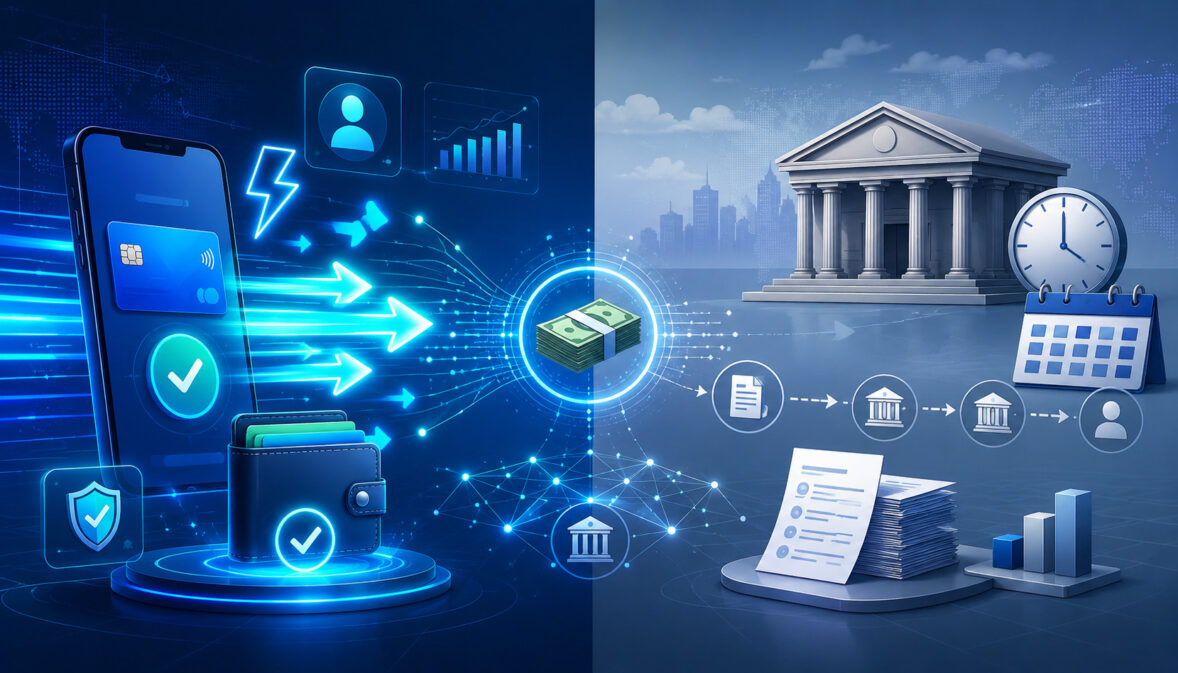
Businesses and consumers compare instant payments vs traditional ACH transfers because both move money electronically, but they solve different problems. One is built for real-time bank transfers, fast confirmation, and immediate availability. The other is built for reliable, lower-cost ACH transfer processing at scale.
The difference matters when timing affects cash flow, payroll, supplier relationships, customer experience, or payment reliability. A contractor waiting on a payout may care more about speed than cost. A business running thousands of recurring payments may care more about predictable processing fees, authorization controls, and reconciliation.
Both options fall under the broader category of electronic funds transfer, but they do not operate the same way. Instant payment systems are designed to move funds within seconds and provide confirmation quickly. Traditional ACH transfers rely on batch processing, network windows, and settlement timing rules that make them dependable but not immediate.
That is why the comparison between instant payments vs ACH transfers is not about which payment method is always better. It is about choosing the right rail for the right use case. For urgent payouts, real-time payments can reduce waiting and improve trust. For scheduled payments, ACH remains one of the most practical business payment methods.
This guide explains how both systems work, how real-time payments vs ACH differ, when to use each option, and how businesses can build a balanced payment strategy that supports speed, cost control, security, and operational efficiency.
What Are Instant Payments?
Instant payments are electronic bank transfers that move funds from one account to another in near real time. Instead of waiting for batch files to be processed later, the payment is sent, received, confirmed, and settled very quickly. In many cases, the recipient can use the funds within seconds or minutes.
The biggest advantage of instant payments is availability. Many instant payment systems are designed to operate around the clock, including weekends and holidays. That makes them useful for businesses that operate outside traditional banking hours or need to send funds after a cutoff time.
Instant payments are often used for urgent business needs, such as contractor payouts, insurance disbursements, emergency refunds, supplier payments, payroll corrections, and marketplace payouts. They are also useful when a payer wants confirmation that funds reached the recipient quickly.
Unlike traditional batch-based transfers, instant payments are typically push payments. That means the sender authorizes the payment and pushes funds to the recipient. This structure can reduce certain return risks, but it also means businesses must be careful before initiating a payment because real-time settlement usually leaves less room for correction.
For a deeper breakdown of payment rails, a helpful internal resource is Payment Rails: ACH vs. RTP vs. FedNow. It explains how modern payment networks differ by speed, availability, settlement, reach, and use case.
Instant payments can improve cash-flow visibility because businesses know when money has moved. The confirmation process is valuable for teams that manage time-sensitive transactions, customer support, treasury operations, or accounts payable.
What Are Traditional ACH Transfers?
Traditional ACH transfers are electronic bank-to-bank payments processed through a batch-based network. Instead of settling each payment individually in real time, ACH transactions are collected, submitted, processed, and settled in scheduled windows. This structure is one reason ACH remains widely used for predictable and recurring payments.
ACH transfers can be credits or debits. A credit pushes funds to another account, such as payroll or vendor payments. A debit pulls funds from an authorized account, such as a bill payment, subscription, loan payment, or rent collection.
ACH is popular because it is cost-effective, familiar, and useful for high-volume payment activity. Businesses often use ACH for direct deposits, supplier payments, recurring billing, membership dues, rent, utility payments, and scheduled transfers. Consumers often encounter ACH through bill pay, automatic withdrawals, payroll deposits, and account-to-account transfers.
ACH payment timing depends on several factors, including submission time, financial institution cutoff times, payment type, risk review, and settlement windows. Standard ACH is not designed to be instant. Same-day ACH can speed up eligible payments, but it still operates through processing windows rather than true real-time settlement.
ACH transfer processing is also valued for authorization and return workflows. For example, ACH debits require proper authorization, and certain unauthorized or incorrect transactions can be returned through defined rules. This makes ACH useful when a business needs a controlled recurring payment process.
A trusted authority on ACH explains that ACH is used for direct deposit and direct payment transactions, and that same-day ACH supports faster processing within the ACH framework.
Traditional ACH transfers are not always the fastest option, but they are dependable for planned payments. When a business knows the amount, recipient, and schedule in advance, ACH can provide a strong balance of cost, automation, and reliability.
Instant Payments vs Traditional ACH Transfers: Key Differences
The main difference in instant payments vs traditional ACH transfers is how the money moves. Instant payments are designed for real-time movement, fast confirmation, and rapid availability. Traditional ACH transfers are designed for batch processing, scheduled settlement, and lower-cost payment volume.
This difference affects more than speed. It changes how businesses manage cash flow, risk, reconciliation, customer service, and operations. Instant payments can help a company respond immediately when timing matters. ACH transfers can help a company automate large volumes of routine payments without paying premium fees for every transaction.
A strong bank transfer comparison should consider speed, settlement, availability, cost, finality, reversibility, and operational fit. A business does not need to choose one rail for every payment. Many organizations use ACH for recurring transactions and instant payments for time-sensitive transfers.
| Feature | Instant Payments | Traditional ACH Transfers | Best Use Case |
| Speed | Funds usually move in seconds or minutes | Funds move through batch processing windows | Instant payments for urgent needs; ACH for planned payments |
| Availability | Often available around the clock | Typically tied to processing windows and business-day schedules | Instant payments for after-hours transfers |
| Settlement | Near real-time or real-time settlement | Batch-based payment settlement | Instant payments when finality matters quickly |
| Payment confirmation | Fast confirmation | Confirmation depends on processing and bank posting | Instant payments for customer-facing payouts |
| Cost profile | Often higher than standard ACH | Often lower per transaction | ACH for recurring or bulk payments |
| Reversibility | Usually limited after sending | Returns and reversals may be available under defined rules | ACH when return workflows matter |
| Payment type | Usually push payments | Credits and debits | ACH for authorized recurring debits |
| Operational fit | Urgent payouts and real-time use cases | Payroll, subscriptions, vendor payments, scheduled billing | Use both for a balanced strategy |
Instant payment systems are best when time is the priority. ACH is best when predictability, cost efficiency, and automation are the priority. A business that understands this distinction can choose the right payment rail without overpaying for speed or risking delays when funds are needed quickly.
Speed and Settlement Timing
Speed is the clearest difference between real-time payments vs ACH. Instant payments are built to move money quickly and provide rapid confirmation. The recipient can often access funds almost immediately, which makes instant payment systems useful for urgent payouts, emergency disbursements, and time-sensitive supplier payments.
Traditional ACH transfers depend on ACH transfer processing windows. Payments are submitted in batches, routed through the network, and settled according to timing rules. Even when ACH payment timing is faster than it used to be, it is still not the same as real-time payment settlement.
This matters for cash flow. If a business sends an ACH payment late in the day, misses a cutoff, or initiates a transfer before a non-processing period, the recipient may not receive funds as soon as expected. Instant payments reduce that uncertainty because they are designed for immediate movement and confirmation.
Same-day ACH narrows the timing gap, but it still follows scheduled processing. For true real-time bank transfers, instant payments are the stronger option.
Cost and Processing Fees
Cost is one reason ACH remains a preferred payment method for recurring and high-volume transactions. Standard ACH is often less expensive than card payments, wires, and many expedited transfer options. That makes ACH useful for payroll, rent, subscriptions, vendor payments, and other predictable payment flows.
Instant payments may carry higher fees depending on the provider, bank, transaction size, and payment platform. However, the extra cost can be justified when speed prevents a bigger problem. For example, a delayed supplier payment may interrupt fulfillment, while a delayed worker payout may create support tickets or damage trust.
The right comparison is not simply “cheap versus expensive.” It is value versus urgency. ACH is cost-effective when time is flexible. Instant payments are valuable when faster payments improve outcomes.
Availability and Payment Finality
Instant payment systems are designed for continuous availability. That means payments can often be sent outside normal business hours, including nights, weekends, and holidays. This is especially valuable for businesses with distributed workers, digital platforms, after-hours customer support, or urgent supplier needs.
Traditional ACH transfers depend on batch schedules and processing windows. A payment initiated after a cutoff may not move until the next available window. This makes ACH reliable, but it requires planning.
Payment finality is another key difference. Instant payments are generally final after they are sent, which gives recipients confidence but increases the sender’s responsibility to verify details first. ACH transfers may allow returns or corrections under specific rules, especially for unauthorized debits or certain errors.
Finality can be a benefit or a risk. It reduces uncertainty for recipients, but businesses must strengthen approval workflows, fraud screening, and account verification before sending instant payments.
Same-Day ACH vs Instant Payments

The comparison between same-day ACH vs instant payments is important because both are faster than standard ACH, but they are not the same. Same-day ACH is an accelerated version of ACH transfer processing. Instant payments are real-time or near-real-time transfers that are built for immediate movement and confirmation.
Same-day ACH works within the ACH system. Eligible transactions can be processed and settled faster than standard ACH, often within the same business day when submitted before applicable cutoffs. That can be very useful for payroll corrections, faster vendor payments, urgent bill payments, and operational transfers.
However, same-day ACH still relies on processing windows. It is not continuously available in the same way as many instant payment systems. If a business misses a cutoff, the payment may move in a later window or on a later processing day. That makes same-day ACH faster, but not always immediate.
Instant payments are different because they are designed for real-time bank transfers. They can provide immediate confirmation and quick funds availability. This makes them better suited for emergency payouts, marketplace withdrawals, insurance claims, contractor payments, and customer refunds where the recipient expects fast access.
Same-day ACH is often a good middle ground. It may cost less than some instant payment options while still improving ACH payment timing. For a business that needs faster payments but does not require funds to arrive within seconds, same-day ACH can be practical.
Nacha describes same-day ACH as a way to send and receive ACH debit and credit payments within hours on the same business day, which highlights the key distinction: same-day ACH is faster ACH, not a fully real-time rail.
Best Use Cases for Instant Payments

Instant payments are most useful when timing, certainty, and recipient experience matter more than the lowest possible transaction cost. They help businesses reduce waiting periods, improve trust, and respond quickly to financial obligations.
Common use cases include emergency payouts. If a customer needs a refund, relief payment, or urgent account credit, an instant payment can reduce stress and support a better service experience. The same applies to insurance claims, where fast access to funds can make a meaningful difference.
Contractor and gig-worker payments are also strong use cases. Many independent workers value fast access to earnings. A platform that offers real-time payouts can improve retention, reduce support requests, and stand out from slower competitors.
Instant payments also fit payroll corrections. If an employee’s scheduled payroll amount is incorrect or delayed, an instant transfer can resolve the issue quickly. This can be more practical than waiting for the next ACH cycle.
Businesses can also use instant payments for urgent supplier payments. If a supplier requires payment before releasing goods or continuing service, real-time payment settlement may prevent disruption. For more on this topic, see B2B Supplier Payments with Instant Transfers.
Other strong use cases include:
- Marketplace seller payouts
- Emergency travel or relocation payments
- Customer refunds after service failures
- Time-sensitive vendor payments
- Treasury transfers between accounts
- On-demand payroll or earned wage access
- Last-minute invoice settlement
Instant payments are also useful when confirmation matters. If a recipient needs to know that funds have arrived before taking action, real-time confirmation can reduce disputes and delays.
Best Use Cases for ACH Transfers
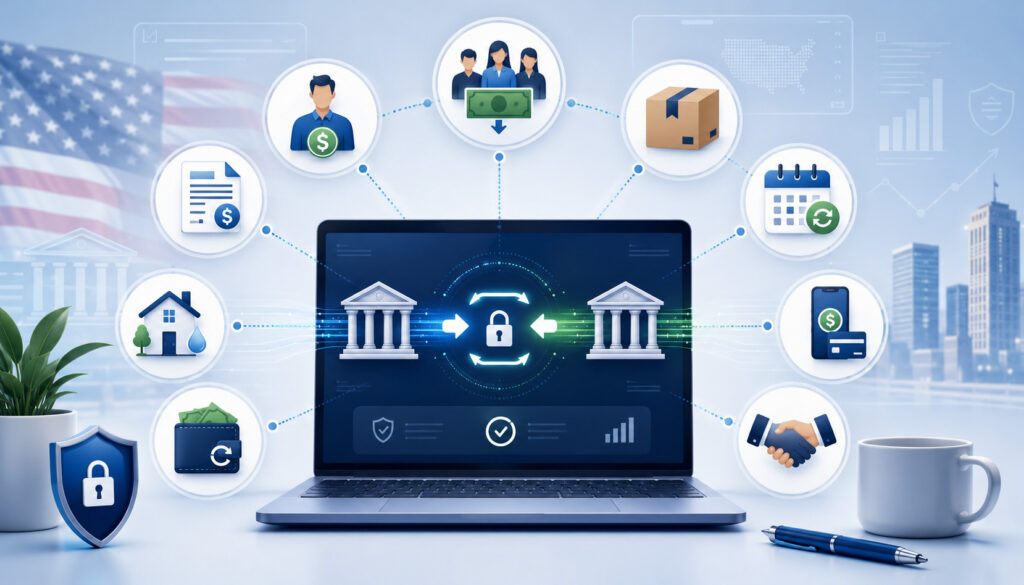
ACH transfers are best for scheduled, recurring, and predictable payments. They are especially useful when a business values automation, lower processing costs, and repeatable workflows over immediate funds availability.
Payroll is one of the most common ACH use cases. Employers can schedule direct deposits in advance, allowing funds to arrive according to a predictable payroll cycle. When payroll is planned properly, ACH offers a reliable and cost-effective way to pay employees.
Recurring billing is another strong use case. Subscriptions, memberships, rent, utilities, tuition payments, and loan payments often rely on ACH debits. Once authorization is in place, businesses can collect payments on a schedule without requiring the customer to manually initiate each transfer.
Vendor payments are also a good fit. Many supplier invoices do not require immediate settlement. If payment terms allow several days, ACH can reduce costs while keeping payments organized. For accounts payable teams, ACH supports batch processing, approval workflows, and reconciliation.
ACH is also useful for rent collection, loan repayment, insurance premiums, account transfers, and business-to-business payments. It supports both debit and credit transactions, which makes it more flexible than many push-only instant payment systems.
A helpful resource on ACH operations is this guide to ACH payment processing, which explains how ACH can support business payments, recurring transactions, and bank-to-bank movement.
ACH works best when the business can plan ahead. If the payment is not urgent, the lower cost and predictable workflow may be more important than speed.
Benefits and Drawbacks of Instant Payments
Instant payments offer clear advantages, especially for businesses that need speed, certainty, and improved recipient experience. They can reduce waiting times, help companies operate beyond traditional processing hours, and make payment status easier to confirm.
Key benefits include:
- Speed: Funds can move within seconds or minutes.
- Continuous availability: Payments may be available around the clock.
- Immediate confirmation: Senders and recipients can know quickly whether payment succeeded.
- Improved cash flow: Recipients can use funds sooner.
- Better customer experience: Fast refunds, payouts, and corrections build trust.
- Reduced uncertainty: Real-time confirmation can reduce follow-up calls and disputes.
For example, a marketplace that pays sellers instantly can improve loyalty and reduce the frustration of waiting for funds. A business that pays an urgent supplier invoice in real time may avoid service disruption. A payroll team that corrects an error immediately can reduce employee stress.
There are also drawbacks. Instant payments may cost more than standard ACH. They may not be supported by every account, bank, or payment provider. Payment finality also means mistakes can be harder to fix after the transfer is sent.
Potential drawbacks include:
- Limited reversibility: Errors require careful handling.
- Fraud exposure: Faster movement can mean faster loss if controls are weak.
- Higher operational pressure: Teams need real-time monitoring and approval rules.
- Provider variation: Not every payment platform supports the same capabilities.
- Account reach limitations: Some recipients may not be reachable through every instant rail.
Instant payments are powerful, but they require disciplined workflows. Businesses should verify account details, authenticate users, monitor unusual activity, and set approval thresholds for high-risk transfers.
Benefits and Drawbacks of Traditional ACH Transfers
Traditional ACH transfers remain popular because they are practical, affordable, and well-suited for predictable payment workflows. For many businesses, ACH is the backbone of recurring payments, payroll, accounts payable, and automated billing.
Key benefits include:
- Cost efficiency: ACH is often economical for high-volume payments.
- Recurring payment support: ACH works well for subscriptions, rent, loans, and memberships.
- Debit and credit capability: Businesses can send funds or collect authorized payments.
- Operational familiarity: Accounting and payroll systems commonly support ACH.
- Structured return process: Certain errors and unauthorized transactions can be handled through defined return rules.
- Scalability: ACH can support large batches of payments.
For example, a property manager collecting monthly rent may prefer ACH because the payment schedule is predictable. A software company billing subscribers may use ACH to reduce card processing costs. A company paying salaried employees can schedule payroll in advance and reconcile payments consistently.
The main drawback is timing. ACH payment timing depends on batch processing, cutoffs, bank posting practices, and settlement windows. If a payment is initiated too late, it may not arrive when expected. ACH is reliable, but it is not built for immediate availability.
Potential drawbacks include:
- Slower settlement: Standard ACH may take longer than instant payments.
- Cutoff sensitivity: Missed deadlines can delay processing.
- Return risk: ACH debits can be returned for insufficient funds or authorization issues.
- Less useful for urgent needs: Emergency payouts may require a faster rail.
- Operational planning required: Businesses must schedule payments carefully.
ACH is not outdated; it is purpose-built for different needs. It is highly useful when payments are predictable, amounts are known, and speed is not the primary concern.
Security and Fraud Considerations
Security is critical when comparing instant payments vs traditional ACH transfers. Faster money movement can improve convenience, but it also changes the risk profile. A secure payment strategy must account for authentication, account verification, authorization, monitoring, and exception handling.
Instant payments require strong controls before the transfer is sent. Because payment finality is usually limited after funds move, businesses should verify recipient details carefully. This may include account validation, identity checks, device monitoring, login security, approval workflows, and transaction limits.
Fraudsters often exploit urgency. They may pressure staff to send funds quickly, change vendor bank details, or approve a “last-minute” payment. Instant payment workflows should include extra checks for new recipients, changed account details, high-value transfers, and unusual timing.
ACH has a different risk profile. ACH debits require authorization, and returns can occur for reasons such as insufficient funds, incorrect account details, or unauthorized activity.
This creates operational risk because a payment that appears successful may later be returned. Businesses using ACH should monitor returns, maintain authorization records, and follow clear customer-notification practices.
Useful controls for both payment types include:
- Multi-factor authentication for payment users
- Role-based access for finance teams
- Dual approval for high-risk payments
- Account verification before first payment
- Vendor change confirmation through trusted channels
- Transaction monitoring for unusual activity
- Clear refund and dispute workflows
- Daily reconciliation of payment activity
Real-time transaction monitoring is especially important for instant payments because speed reduces the time available to stop suspicious activity. For more detail, see Real-Time Transaction Monitoring Systems.
How Businesses Should Choose Between Instant Payments and ACH
Choosing between instant payments and ACH starts with the purpose of the payment. The best payment rail depends on urgency, cost sensitivity, payment amount, recipient expectations, settlement needs, risk tolerance, and reconciliation requirements.
If the payment is urgent, customer-facing, or tied to a time-sensitive obligation, instant payments may be the better choice. Examples include emergency refunds, worker payouts, urgent supplier payments, and payroll corrections. In these cases, speed can create real value.
If the payment is recurring, scheduled, or high-volume, ACH may be more practical. Examples include monthly billing, subscriptions, rent, payroll, vendor batches, and loan payments. In these cases, lower cost and automation may matter more than immediate settlement.
Businesses should also consider the recipient’s preference. Some recipients want funds as quickly as possible. Others prefer scheduled transfers that align with accounting processes. A flexible payment strategy gives businesses the ability to offer multiple options without forcing every payment through the same rail.
A practical decision framework:
- Use instant payments when the payment is urgent, after-hours, customer-facing, or dependent on immediate confirmation.
- Use same-day ACH when funds should arrive faster than standard ACH but do not need real-time settlement.
- Use standard ACH when the payment is scheduled, recurring, cost-sensitive, or high-volume.
- Use additional controls when the payment is high value, unusual, or sent to a new recipient.
Reconciliation is also important. ACH batch files may be easier for accounting teams handling large volumes. Instant payments may require real-time posting, alerts, and more frequent reconciliation. Businesses should make sure their accounting systems, payment platforms, and approval workflows can support the selected rail.
A balanced strategy often works best. ACH can remain the default for predictable payments, while instant payments serve as a premium or exception-based option for faster payments. This approach helps businesses control costs without sacrificing speed when speed matters.
What is the difference between instant payments and ACH transfers?
The main difference is speed and processing method. Instant payments are designed for real-time bank transfers with quick confirmation and rapid funds availability. Traditional ACH transfers are processed in batches and settle according to network windows and bank timing.
Instant payments are better for urgent payouts, emergency transfers, and time-sensitive business needs. ACH transfers are better for scheduled payments, recurring billing, payroll, and cost-sensitive transactions. In the broader bank transfer comparison, instant payments prioritize speed, while ACH prioritizes affordability, automation, and predictable workflows.
Are instant payments faster than ACH?
Yes. Instant payments are generally faster than ACH because they are designed to move funds in real time or near real time. ACH transfer processing relies on batch submission and settlement windows, which can delay availability.
Same-day ACH can speed up ACH payment timing, but it still does not operate like a fully real-time payment system. If the recipient needs funds immediately, instant payments are usually the better fit. If the payment can be planned in advance, ACH may be more cost-effective.
Is same-day ACH the same as instant payments?
No. Same-day ACH and instant payments are different. Same-day ACH is an accelerated ACH option that can move eligible payments within the same business day when submitted properly. It still depends on ACH processing windows and cutoffs.
Instant payments are designed for immediate or near-immediate settlement and confirmation. In the comparison of same-day ACH vs instant payments, same-day ACH is useful when a payment needs to arrive faster than standard ACH, while instant payments are best when funds need to move right away.
Which option is cheaper?
Traditional ACH is often cheaper for scheduled, recurring, and high-volume payments. This is why ACH is widely used for payroll, subscriptions, rent, and vendor payments. It allows businesses to move funds electronically without paying premium fees for every transaction.
Instant payments may cost more depending on the provider and payment setup. However, they can still be worth the cost when speed improves cash flow, customer satisfaction, or operational outcomes. The cheapest option is not always the best option if a delay creates a bigger problem.
Are instant payments reversible?
Instant payments are usually difficult to reverse after they are sent. Because settlement happens quickly, businesses must verify recipient details before initiating the payment. Mistakes, fraud, or misdirected payments can be more difficult to resolve than slower payment methods.
This does not mean instant payments are unsafe. It means businesses need strong authentication, account verification, approval rules, and fraud monitoring. Payment finality is valuable for recipients, but senders must treat instant transfers carefully.
When should businesses use ACH?
Businesses should use ACH when payments are predictable, recurring, cost-sensitive, or easy to schedule in advance. Common examples include payroll, rent collection, subscriptions, vendor payments, insurance premiums, memberships, and loan payments.
ACH is also useful when businesses need debit capability, authorization records, and established return workflows. It works best when payment timing can be planned and when immediate funds availability is not required.
When should businesses use instant payments?
Businesses should use instant payments when speed and confirmation are important. Good examples include emergency payouts, contractor payments, payroll corrections, insurance claims, marketplace withdrawals, urgent supplier payments, and customer refunds.
Instant payments are also useful outside standard processing hours. If a business needs to send money after a cutoff time or during a non-processing period, an instant payment system can provide flexibility that traditional ACH may not offer.
Are instant payments secure?
Instant payments can be secure when businesses use the right controls. Important safeguards include user authentication, account verification, transaction monitoring, payment limits, dual approvals, and fraud alerts.
The main security challenge is speed. Fast payments leave less time to detect and stop suspicious transactions after initiation. That is why instant payment systems should be paired with strong prevention controls before funds move.
Conclusion
The comparison of instant payments vs traditional ACH transfers comes down to purpose. Instant payments are best for speed, real-time availability, fast confirmation, and urgent payment needs. Traditional ACH transfers are best for predictable, scheduled, recurring, and lower-cost transactions.
Neither option replaces the other. They serve different roles in a modern payment strategy. Instant payments help businesses move quickly when timing matters. ACH helps businesses manage routine payment operations efficiently and affordably.
For most organizations, the strongest approach is a hybrid model. Use ACH for planned payments such as payroll, subscriptions, rent, and vendor batches. Use same-day ACH when a payment needs to move faster but does not require immediate settlement. Use instant payments when urgency, confirmation, and recipient experience justify the added speed.
A practical payment strategy should balance speed, cost, settlement, security, and reconciliation. When businesses understand the difference between instant payments vs ACH transfers, they can choose the right rail for each transaction and build a more reliable payment operation.